

7 Top Signs Your Wheel Alignment Needs Fixing for Highway Vibrations
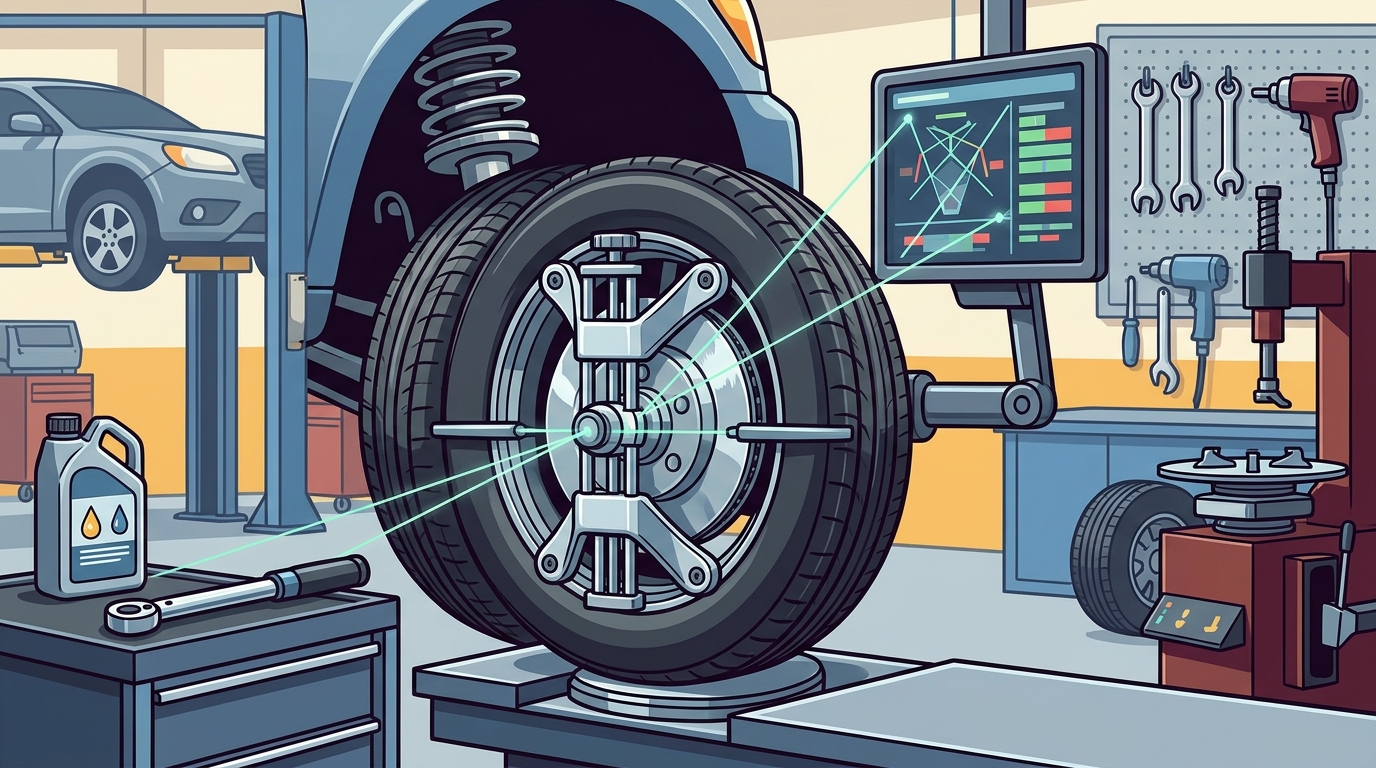
Highway vibrations can indicate more than just a simple tire issue. At Redwood General Tire Pros in Redwood City, we often see drivers who mistake alignment problems for balancing issues. Wheel alignment is the adjustment of your vehicle's wheel angles to meet the manufacturer's specifications. Proper alignment ensures your car travels straight and your tires wear evenly. If you feel a shake at high speeds, it is crucial to determine if the root cause is alignment or another factor.
1. The Steering Wheel Pulls to One Side
Your car drifts left or right even when the road is flat. This is the most common indicator of misalignment. When the toe or camber angles are off, the vehicle naturally pulls toward the side with the greater angle. On a straight, flat highway, you should not need to constantly correct the steering wheel to stay in your lane. If you find yourself fighting the wheel to keep the car centered, your alignment likely needs attention.
2. Uneven Tire Wear Patterns
One edge of the tire wears down faster than the other. Misalignment causes tires to scrub against the road surface rather than roll smoothly. You might notice feathering, where the tread has a sharp edge on one side and a smooth slope on the other. This type of wear is a direct result of incorrect toe or camber settings. Regular inspections can catch this before the tire is destroyed.
3. Vibration That Changes with Steering Input
The shake gets worse when you turn the wheel slightly. While balancing issues often cause a consistent shake at specific speeds, alignment problems can manifest as a vibration that changes when you steer. If the vibration shifts or intensifies when you make minor corrections to the steering wheel, it suggests the wheels are not tracking parallel to each other. This dynamic response is a key differentiator from static balancing issues.
4. A Crooked Steering Wheel When Driving Straight
The wheel is not centered when the car is going straight. If your car drives straight but the steering wheel is tilted to one side, your alignment is off. This happens when the front wheels are not parallel to the steering axis. It is a clear sign that the geometry of your suspension has shifted. Correcting this ensures that your steering input matches the actual direction of the wheels.
5. Increased Fuel Consumption
Your car uses more gas than usual without a change in driving habits. Misaligned wheels create extra rolling resistance because the tires are not rolling straight. This drag forces your engine to work harder, leading to lower fuel efficiency. While the impact might seem small, it adds up over thousands of miles. Proper alignment helps restore optimal aerodynamics and rolling efficiency.
6. Noisy Tires on the Highway
You hear a humming or roaring noise that increases with speed. While often associated with balancing, misalignment can cause tires to make noise due to uneven contact with the road. The irregular wear patterns created by bad alignment can lead to a rhythmic humming sound. If the noise is consistent and tied to speed, it is worth checking the alignment to rule out geometric issues.
7. Recent Impact with a Curb or Pothole
You hit a hard object and now feel a difference in handling. Hitting a curb, pothole, or speed bump can knock your wheels out of alignment instantly. The suspension components, such as control arms and tie rods, can bend or shift under impact. If you remember a recent hard impact and now notice any of the above symptoms, it is highly likely your alignment is compromised. A professional check can confirm if the geometry has shifted.
Choosing the Right Service
If you experience a consistent shake at a specific speed, it is often a balancing issue. However, if you see uneven wear, a pull, or a crooked wheel, it is an alignment issue. At Redwood General Tire Pros, we perform comprehensive inspections to distinguish between these two. We recommend scheduling a wheel alignment service if you notice any of these signs. Our ASE-certified technicians use precision equipment to ensure your vehicle is set to factory specifications. You can also explore our tire care tips to maintain your tires between visits. For a full assessment, visit our auto repair services page to learn more about how we keep your vehicle safe. To book your appointment, schedule online or call us today.
Frequently Asked Questions
Can wheel alignment fix highway vibrations?
Yes, if the vibration is caused by misaligned wheels. However, if the vibration is a consistent shake at a specific speed, it is more likely a tire balancing issue. A professional inspection can determine the exact cause.
How often should I get my wheel alignment checked?
It is recommended to check your alignment every 6,000 to 10,000 miles or whenever you notice uneven tire wear or a pulling sensation. Hitting a large pothole or curb may also require an immediate check.
What is the difference between wheel alignment and tire balancing?
Wheel alignment adjusts the angles of the wheels relative to the vehicle and the road. Tire balancing ensures the weight of the wheel and tire assembly is evenly distributed. Alignment affects handling and wear, while balancing affects smoothness and vibration.
Will bad alignment damage my tires?
Yes, misalignment causes uneven tire wear, which can significantly shorten the life of your tires. It can also lead to premature failure if left unaddressed for a long period.
Can I drive with a misaligned wheel?
While it is possible to drive, it is not recommended for long periods. Misalignment can lead to unsafe handling, increased fuel consumption, and rapid tire damage. It is best to have it corrected as soon as possible.
Does Redwood General Tire Pros offer alignment services?
Yes, we offer professional wheel alignment services for all makes and models. Our technicians use state-of-the-art equipment to ensure precise adjustments.