
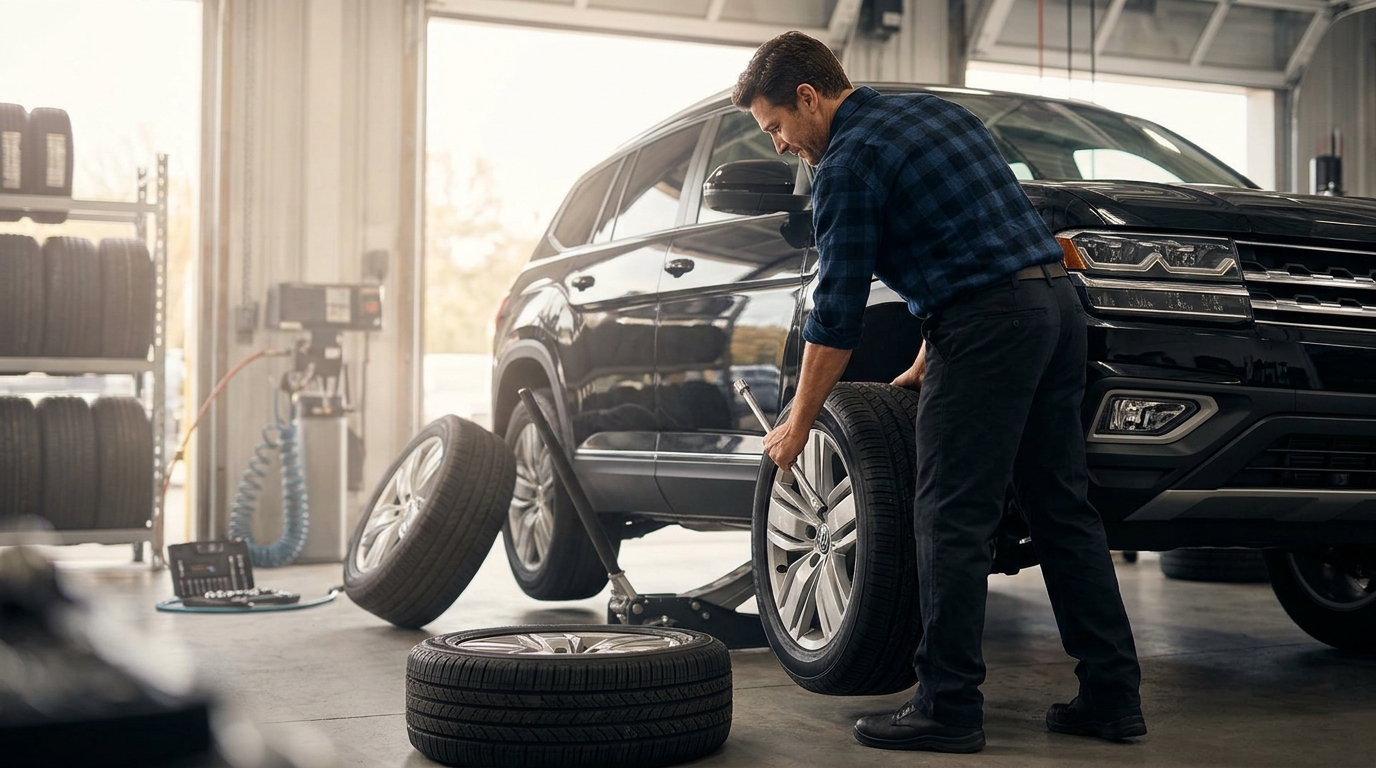
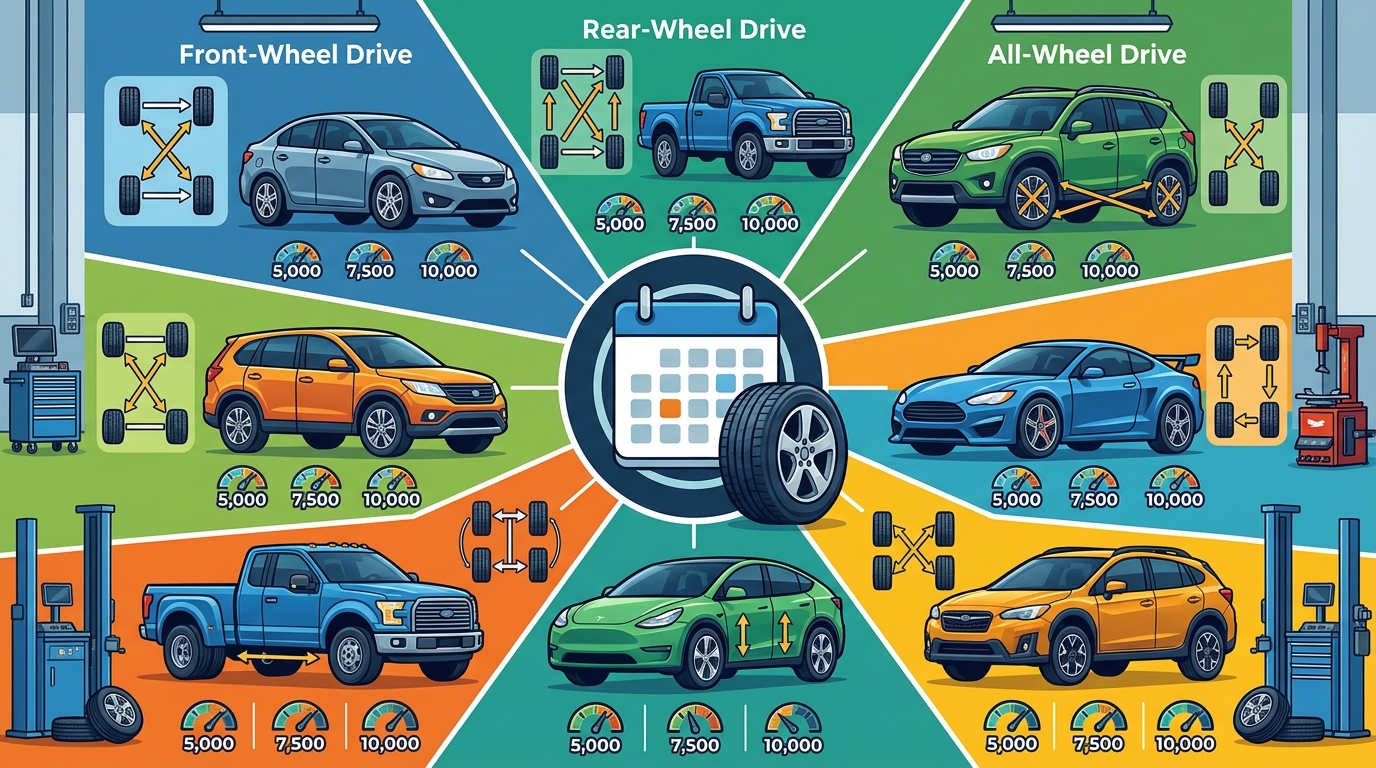
Vehicle manufacturers provide specific tire rotation intervals to ensure even tread wear and maximize tire life. These schedules vary by drivetrain type and vehicle model, often ranging from 5,000 to 10,000 miles. Understanding these distinct schedules helps drivers maintain optimal safety and performance. For additional details, review the Check Engine Light Service.
1. Standard 5,000-Mile Interval for Front-Wheel Drive
Front-wheel drive vehicles typically require rotation every 5,000 miles. This schedule is common for sedans and compact cars where the front tires bear the brunt of steering and driving forces. Frequent rotation prevents the front tires from wearing out significantly faster than the rear tires. This interval aligns with standard oil change frequencies for many modern engines.
2. 7,500-Mile Interval for High-Performance Models
High-performance and sport-oriented vehicles often recommend a 7,500-mile rotation. These vehicles use specialized tire compounds that may wear differently under aggressive driving conditions. The slightly longer interval accounts for the specific wear patterns of performance tires. Drivers should still inspect tread depth regularly to ensure safety.
3. 10,000-Mile Interval for Rear-Wheel Drive
Rear-wheel drive vehicles frequently follow a 10,000-mile rotation schedule. In these vehicles, the rear tires handle the primary driving force, while the front tires focus on steering. This distribution often results in more even wear across all four tires. The longer interval reduces the frequency of service visits for the driver.
4. 5,000-Mile Interval for All-Wheel Drive
All-wheel drive systems generally mandate a strict 5,000-mile rotation. AWD systems rely on precise tire circumference matching to prevent drivetrain damage. Uneven tire wear can cause the system to work harder, leading to premature component failure. Adhering to this schedule is critical for protecting the complex AWD hardware.
5. 7,500-Mile Interval for Electric Vehicles
Electric vehicles often recommend a 7,500-mile rotation due to instant torque. The immediate power delivery of EVs can accelerate tire wear, particularly on the drive wheels. The heavier weight of battery packs also increases the load on tires. This schedule helps balance the unique stress factors present in electric drivetrains.
6. 5,000-Mile Interval for Hybrid Vehicles
Hybrid vehicles typically adhere to a 5,000-mile rotation schedule. Similar to EVs, hybrids can experience uneven wear due to the combination of electric and gas power. The regenerative braking system may also affect tire wear patterns. Regular rotation ensures that the tires last as long as possible despite these variables.
7. 10,000-Mile Interval for Light Trucks
Light trucks and SUVs often allow for a 10,000-mile rotation. These vehicles are designed with robust tire constructions that handle higher loads. The larger tire size and heavier vehicle weight can lead to slower relative wear rates. However, drivers should check their specific owner's manual for exact recommendations.
Choosing the Right Schedule for Your Vehicle
Always prioritize the specific interval listed in your vehicle owner's manual over general guidelines. If you drive in severe conditions, such as extreme heat or heavy towing, consider rotating more frequently. For professional service in Redwood City, Redwood General Tire Pros offers expert tire rotation and maintenance services.
Frequently Asked Questions
What happens if I do not rotate my tires on schedule?
Uneven tire wear will occur, leading to reduced tire life and potential safety hazards. It can also cause vibrations and affect vehicle handling. In AWD vehicles, it may damage the drivetrain components.
Do I need to rotate tires if I only drive short distances?
Yes, time-based wear also affects tires, so rotating every six months is advisable if you do not reach the mileage threshold. This prevents flat spots and ensures even wear distribution.
Can I rotate my tires myself at home?
Yes, if you have the proper tools and knowledge, you can rotate tires at home. However, professional service ensures correct torque specifications and alignment checks are performed.
Does tire rotation affect fuel efficiency?
Yes, properly rotated and maintained tires reduce rolling resistance, which can improve fuel efficiency. Uneven wear increases resistance and can lower miles per gallon.
Where can I get tire rotation services in Redwood City?
You can schedule an appointment at Redwood General Tire Pros for professional tire rotation and inspection services. Learn more: Auto Repair Services in.