
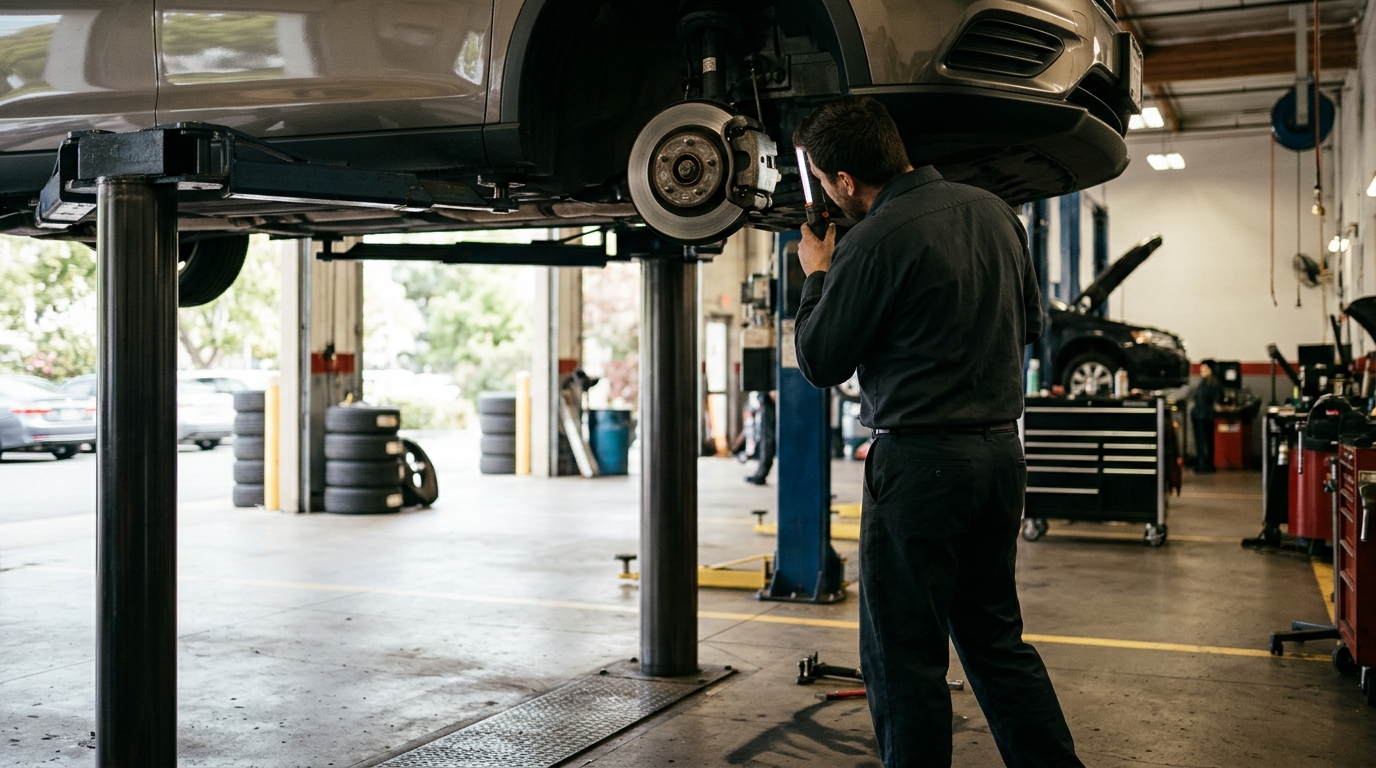
During a professional brake inspection, a technician examines your pads, rotors, calipers, and fluid to assess wear and safety. In Redwood City, you should schedule a full brake inspection every 12 months or 12,000 miles. This routine check ensures your vehicle stops reliably in the Peninsula's stop-and-go traffic. Redwood General Tire Pros provides these inspections using ASE-certified technicians to keep your car safe.
What Happens During a Brake Inspection
A brake inspection is a systematic evaluation of your vehicle's braking components. The process begins with a visual check of the brake pads and rotors. Technicians measure the remaining thickness of the pads to determine if they are near the wear limit. They also inspect the rotors for signs of warping, scoring, or excessive thinning.
The inspection extends beyond the visible friction materials. Technicians check the brake fluid level and condition, as contaminated fluid can reduce braking power. They also examine the calipers and brake lines for leaks or corrosion. This comprehensive approach ensures that no hidden issues are overlooked. At Redwood General Tire Pros, our team follows a strict protocol to document every finding.
Understanding the components helps you make informed decisions. A brake pad is a friction material that clamps against the rotor to slow the vehicle. A rotor is a metal disc that the pads clamp onto. Knowing these parts helps you understand why a technician might recommend replacing one but not the other.
Warning Signs That You Need an Inspection
Your vehicle often signals brake issues before they become critical. The most common sign is a squeaking or squealing noise when you apply the brakes. This sound is usually produced by a wear indicator built into the brake pad. It serves as an early warning that the pad material is thinning.
A grinding noise is a more urgent signal. Grinding indicates that the pad material is completely worn away, causing the metal backing plate to scrape against the rotor. This can cause significant damage to the rotor, leading to higher repair costs. If you hear grinding, you should schedule an inspection immediately.
Other signs include a soft or spongy brake pedal and vibration when braking. A soft pedal may indicate air in the brake lines or low fluid. Vibration often points to warped rotors. In Redwood City, where drivers frequently stop at traffic lights, these symptoms are easy to notice. Ignoring them can compromise your safety on local roads.
How Often Should You Get a Brake Inspection
Most manufacturers recommend a brake inspection every 12,000 miles or once a year. This interval aligns with typical oil change and maintenance schedules. Regular inspections help catch minor issues before they escalate into major repairs. For drivers in Redwood City, this frequency is ideal due to the mix of highway and city driving.
Driving conditions can affect how often you need an inspection. Frequent stop-and-go traffic accelerates brake wear. If you drive primarily in urban areas, you may need inspections more often. Conversely, if you drive mostly on highways, your brakes may last longer. Your driving habits should guide your maintenance schedule.
Age also plays a role in brake health. Even if you drive few miles, brake components can degrade over time. Rubber parts can dry out, and metal parts can corrode. An annual inspection ensures that age-related issues are addressed. This proactive approach extends the life of your braking system.
Cost and Value of Regular Inspections
Regular brake inspections are a cost-effective investment in your vehicle's safety. The cost of an inspection is typically lower than the cost of emergency brake repairs. By catching issues early, you avoid expensive damage to rotors and calipers. This preventive approach saves money in the long run.
The value of a brake inspection extends beyond cost savings. It provides peace of mind, knowing that your vehicle is safe. In Redwood City, where safety is a priority for families and commuters, this peace of mind is invaluable. Redwood General Tire Pros offers transparent pricing and clear recommendations, so you always know what to expect.
Consider the total cost of ownership when deciding on inspection frequency. A small investment in regular maintenance can prevent a large, unexpected expense. This financial prudence is a key benefit of proactive vehicle care. It also helps maintain your vehicle's resale value.
Choosing the Right Provider in Redwood City
Selecting a reputable provider is crucial for accurate brake inspections. Look for a shop with ASE-certified technicians who have experience with your vehicle's make and model. Redwood General Tire Pros has served the Redwood City community since 1957, building a reputation for trust and quality. Their long-standing presence in the area reflects their commitment to customer satisfaction.
Convenience is another factor to consider. A shop with flexible appointment scheduling can fit into your busy life. Redwood General Tire Pros offers convenient hours and easy online booking. This makes it simple to stay on top of your maintenance schedule. You can book an appointment that works for you, minimizing downtime.
Customer service is a key differentiator. A good provider explains findings clearly and offers options. They should not pressure you into unnecessary repairs. At Redwood General Tire Pros, the team focuses on honest advice and fair pricing. This customer-first approach ensures that you feel confident in their recommendations.
Key Takeaways
- A brake inspection is a detailed check of pads, rotors, calipers, and fluid to ensure safety.
- Schedule a full brake inspection every 12 months or 12,000 miles for optimal performance.
- Squeaking, grinding, or a soft pedal are clear signs that you need an immediate inspection.
- Regular inspections prevent costly damage to rotors and calipers, saving money over time.
- Choose a provider with ASE-certified technicians and a strong local reputation, like Redwood General Tire Pros.
- Convenient scheduling and transparent communication are essential when selecting a service provider.
Frequently Asked Questions
How long does a brake inspection take?
A standard brake inspection typically takes 15 to 30 minutes. This allows the technician to thoroughly examine all components. If repairs are needed, additional time will be required for the work.
Do I need to replace both front and rear brakes at the same time?
Not necessarily. Brakes are usually replaced in pairs, such as both front or both rear. However, if one side is significantly more worn than the other, the technician may recommend replacing that pair. The goal is to maintain balanced braking performance.
What is the difference between brake pads and rotors?
Brake pads are the friction material that clamps against the rotor. Rotors are the metal discs that the pads clamp onto. Pads wear out faster and are replaced more often than rotors.
Can I drive with worn brake pads?
It is not recommended. Driving with worn pads can damage the rotors and reduce your stopping power. If you notice warning signs, schedule an inspection as soon as possible.
How much does a brake inspection cost in Redwood City?
Costs vary by provider, but many shops offer free or low-cost inspections with a service. Redwood General Tire Pros provides transparent pricing, so you can expect a clear quote before any work begins.
Do electric vehicles need brake inspections?
Yes, electric vehicles still have brake systems that require maintenance. While regenerative braking reduces wear, the mechanical brakes still need regular inspection to ensure safety.
Conclusion
Regular brake inspections are essential for safe driving in Redwood City. By understanding the process, recognizing warning signs, and scheduling inspections annually, you can keep your vehicle in top condition. Redwood General Tire Pros offers expert brake inspections and repairs, backed by decades of local experience. To schedule your next brake inspection, book an appointment today and drive with confidence. Learn more: Contact Us Redwood General.