

Highway shaking is often a sign of wheel misalignment. When wheels are not set to the manufacturer's specifications, they create uneven friction and vibration at high speeds. Redwood General Tire Pros explains how alignment angles affect stability and why correcting them is essential for safety and tire longevity.
The Mechanics of High-Speed Vibration
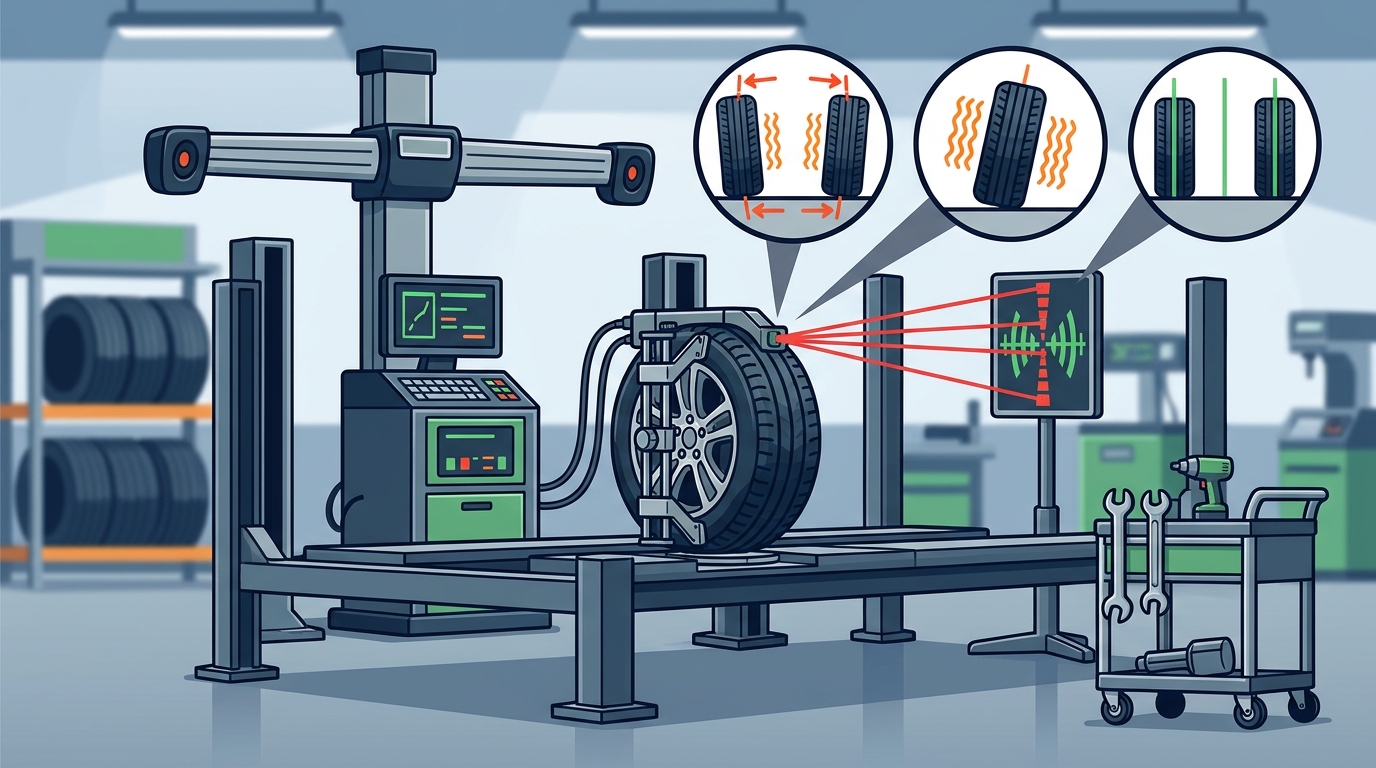
Wheel alignment is the adjustment of the angles of your vehicle's wheels so they are parallel to each other and perpendicular to the road. When these angles are off, the tires do not contact the pavement evenly. This uneven contact generates a rhythmic shake that becomes more pronounced as speed increases. The faster you drive, the more force is applied to the misaligned contact patch, amplifying the vibration felt in the steering wheel or seat.
At highway speeds, even a slight deviation in toe or camber can cause the vehicle to oscillate. This is not just a comfort issue; it is a mechanical warning. The tires are fighting against the road surface, creating heat and stress that a properly aligned vehicle would not experience. Understanding this mechanical relationship helps drivers recognize that shaking is a symptom of a geometric problem, not just a worn part.
Alignment vs. Balancing: Distinct Issues
Many drivers confuse wheel alignment with wheel balancing. Wheel balancing is the process of adding small weights to the wheel assembly to ensure it rotates evenly. Alignment, however, deals with the static angles of the wheels relative to the vehicle's chassis. A balanced wheel can still be misaligned, and a misaligned wheel can cause shaking even if it is perfectly balanced.
If your car shakes only at high speeds, it is often a balancing issue. However, if the car pulls to one side, the steering wheel is off-center, or the tires show uneven wear, alignment is the primary suspect. Redwood General Tire Pros technicians inspect both systems to determine the root cause. Treating a misalignment as a balancing issue will not fix the underlying geometric fault, leading to recurring problems and premature tire failure.
The Impact on Tire Wear and Safety
Misalignment causes specific wear patterns that are distinct from normal aging. For example, excessive toe-in or toe-out leads to feathering, where the tread edges feel sharp to the touch. Excessive camber causes one edge of the tire to wear down faster than the other. These patterns reduce the tire's ability to grip the road, especially in wet conditions. The result is a shorter lifespan for your tires and a compromised safety margin.
Furthermore, misalignment affects the vehicle's handling stability. A car that is not aligned correctly may feel loose or unpredictable during emergency maneuvers. The steering response becomes less precise, and the vehicle may not track straight without constant correction. This lack of stability is a significant safety risk, particularly on highways where reaction time is critical. Correcting alignment restores the vehicle's intended handling characteristics and ensures predictable behavior.
Diagnosing the Source of the Shake
Identifying the cause of highway shaking requires a systematic approach. Drivers should first check tire pressure and inspect the tires for visible damage or uneven wear. If the tires appear healthy and are inflated to specification, the next step is a professional alignment inspection. Technicians use laser or camera-based equipment to measure the current angles and compare them to the manufacturer's data.
During this inspection, technicians also check suspension components for wear. Worn ball joints, tie rods, or control arm bushings can cause the alignment to drift out of specification. These components must be repaired before an alignment can be performed, as the vehicle will simply return to its misaligned state. Redwood General Tire Pros provides comprehensive diagnostics to ensure that all contributing factors are addressed, not just the symptom.
Maintaining Alignment for Long-Term Performance
Wheel alignment is not a one-time service. Road conditions, such as potholes and speed bumps, can knock wheels out of alignment over time. It is generally recommended to check alignment every two to three years or after any significant impact. Regular checks help maintain optimal tire wear and fuel efficiency. Proper alignment ensures less rolling resistance, which can improve gas mileage slightly over the life of the vehicle.
Drivers should also be aware of symptoms that indicate alignment drift. A steering wheel that is not centered when driving straight is a clear sign. A vehicle that pulls to one side on a flat, straight road is another. Addressing these signs early prevents the need for expensive tire replacements and ensures a smoother, safer ride. Redwood General Tire Pros offers precise alignment services to keep your vehicle in top condition.
Key Takeaways
- Wheel alignment adjusts the angles of the wheels to ensure they are parallel and perpendicular to the road.
- Highway shaking can be caused by misalignment, which creates uneven tire contact and vibration.
- Alignment and balancing are different services; balancing fixes rotation issues, while alignment fixes geometric angles.
- Misalignment leads to specific tire wear patterns, such as feathering and edge wear, reducing tire life.
- Proper alignment improves handling stability and safety, especially during emergency maneuvers.
- Regular alignment checks, every two to three years, help maintain vehicle performance and tire longevity.
Frequently Asked Questions
Can wheel alignment fix highway shaking?
Yes, if the shaking is caused by misalignment. However, if the shaking is due to wheel imbalance or worn suspension components, alignment alone may not resolve the issue. A professional diagnosis is needed to determine the root cause.
How often should I get a wheel alignment?
It is generally recommended to check wheel alignment every two to three years. You should also get an alignment after hitting a large pothole, curb, or after replacing tires.
What is the difference between alignment and balancing?
Alignment adjusts the angles of the wheels relative to the vehicle and road. Balancing adds weights to the wheels to ensure they rotate evenly. Both are important for a smooth ride, but they address different mechanical issues.
Does misalignment affect fuel efficiency?
Yes, misalignment increases rolling resistance, which can slightly reduce fuel efficiency. Proper alignment ensures the tires roll with minimal resistance, helping to maintain optimal gas mileage.
Can I drive with a misaligned vehicle?
While it is possible to drive with a misaligned vehicle, it is not recommended for long periods. Misalignment causes uneven tire wear and can affect handling stability, posing a safety risk.
Conclusion
Wheel alignment is a critical aspect of vehicle maintenance that directly impacts safety, tire life, and driving comfort. If your car shakes on the highway, it is important to have the alignment checked by a professional. Redwood General Tire Pros in Redwood City, CA, provides expert alignment services to ensure your vehicle performs at its best. Schedule your wheel alignment today to restore smooth, stable driving.