

The ideal mileage to rotate passenger car tires is typically every 5,000 to 7,500 miles. This interval aligns with standard oil change schedules and helps ensure even tread wear across all four tires. Adhering to this schedule prevents premature tire failure and maintains optimal vehicle handling. Redwood General Tire Pros in Redwood City, CA, recommends following your vehicle owner's manual for the most accurate interval specific to your make and model.
Why Rotation Matters for Tire Longevity
Tire rotation is the process of moving tires from one position on the vehicle to another to promote even wear. Without rotation, front tires on front-wheel-drive vehicles wear significantly faster than rear tires due to steering and propulsion forces. This uneven wear reduces the overall lifespan of the tire set and can compromise safety. By rotating tires regularly, you maximize the usable tread depth on all four tires, delaying the need for replacement.
Uneven wear patterns can also lead to vibration and poor handling. When one tire wears down faster, it creates an imbalance that the vehicle's suspension must compensate for. This can result in a rougher ride and increased stress on suspension components. Redwood General Tire Pros emphasizes that rotation is a low-cost preventive measure that protects a high-value investment in your tires.
Standard Intervals by Vehicle Type
Most passenger cars and light trucks benefit from rotation every 5,000 to 7,500 miles. This range covers the majority of modern vehicles equipped with radial tires. However, specific drivetrain configurations can influence the optimal timing. Front-wheel-drive vehicles often require more frequent rotation because the front tires bear the brunt of acceleration and steering loads. Rear-wheel-drive vehicles may experience different wear patterns, with rear tires wearing faster during acceleration.
All-wheel-drive and four-wheel-drive systems distribute power to all wheels, which can result in more uniform wear. Nevertheless, rotation remains essential to account for differences in steering and braking forces. Always consult your owner's manual for the manufacturer's recommended interval. If the manual specifies a time-based interval, such as every six months, follow that guideline even if you have not reached the mileage threshold.
Recognizing Signs of Uneven Wear
Visible wear patterns are the most direct indicators that your tires need attention. Common signs include cupping, where the tread surface develops small dips or hollows. This pattern often results from worn suspension components or improper tire pressure. Another sign is feathering, where the tread edges feel sharp to the touch when rubbed in one direction. These patterns suggest that the tires are not wearing evenly and may require rotation or alignment.
Uneven wear across the tread width, such as excessive wear on the inner or outer edges, can indicate alignment issues. While rotation helps distribute wear, it cannot correct underlying mechanical problems. If you notice persistent uneven wear after rotation, a professional inspection is necessary. Redwood General Tire Pros offers comprehensive tire inspections to identify and address the root causes of irregular wear patterns.
Choosing the Right Rotation Pattern
The rotation pattern depends on your vehicle's drivetrain and tire type. For front-wheel-drive vehicles with non-directional tires, a front-to-rear cross pattern is often recommended. This pattern moves the front tires to the rear and the rear tires to the opposite front positions. For all-wheel-drive vehicles, a forward or lateral cross pattern may be more appropriate. Directional tires, which have a specific tread design for water evacuation, can only be rotated front-to-rear on the same side of the vehicle.
Using the correct pattern ensures that each tire experiences a variety of positions, promoting balanced wear. Incorrect rotation can lead to accelerated wear on specific tires. Redwood General Tire Pros technicians are trained to select the optimal pattern for your specific vehicle and tire setup. They use specialized equipment to ensure tires are mounted and balanced correctly after rotation.
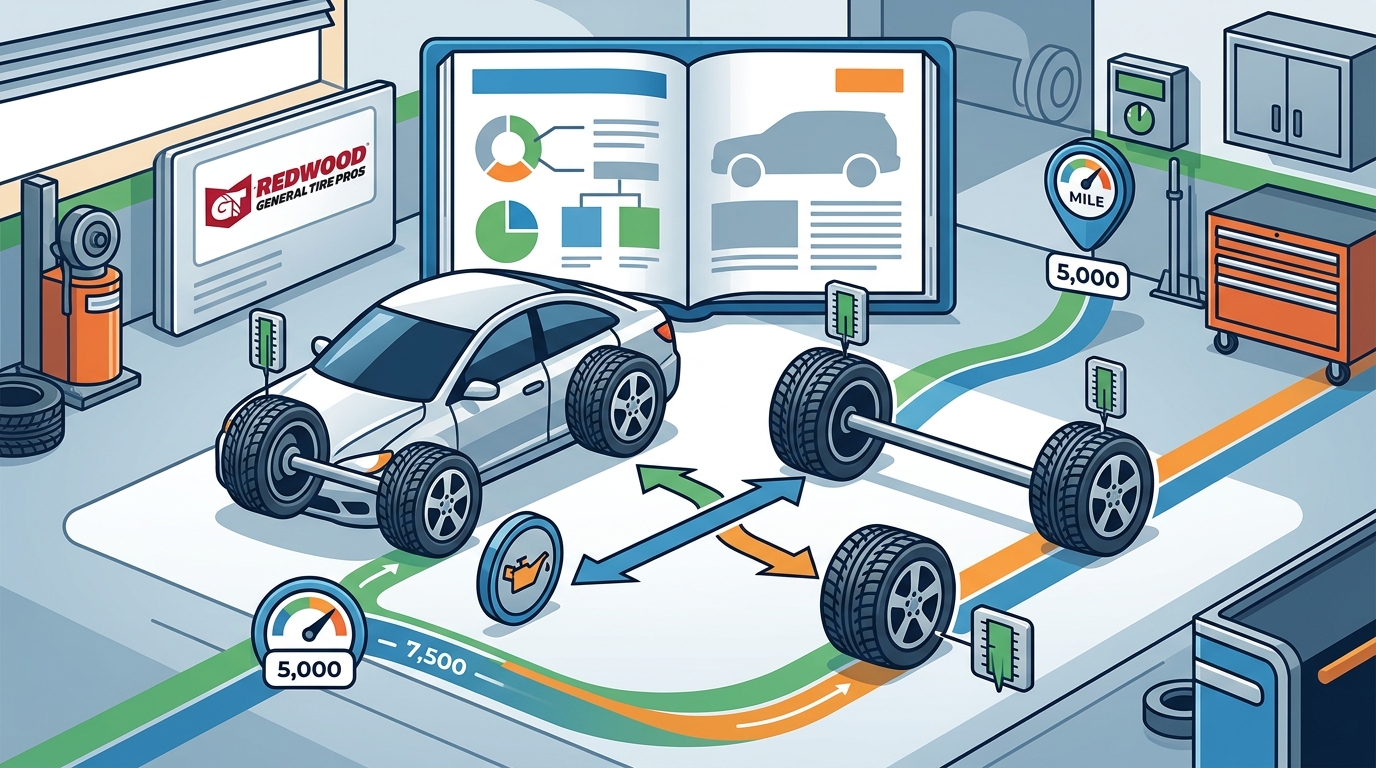
Integrating Rotation into Your Maintenance Schedule
Combining tire rotation with other routine services saves time and money. Scheduling rotation at the same time as an oil change or tire pressure check streamlines your maintenance routine. This approach ensures that you do not forget the rotation interval. Many drivers find it convenient to rotate tires every time they get an oil change, as both services typically occur at similar intervals.
Keeping a record of your rotation dates and mileage helps you stay on track. Your vehicle's maintenance log or a simple note in your phone can serve as a reminder. Redwood General Tire Pros provides digital maintenance records for all customers, making it easy to track service history. Consistent maintenance not only extends tire life but also improves fuel efficiency and overall vehicle performance.
Key Takeaways
- The ideal rotation interval for most passenger cars is every 5,000 to 7,500 miles.
- Front-wheel-drive vehicles may require more frequent rotation due to higher front tire wear.
- Always follow the specific interval recommended in your vehicle owner's manual.
- Visible wear patterns like cupping or feathering indicate the need for rotation or inspection.
- The correct rotation pattern depends on your drivetrain and tire type.
- Combining rotation with oil changes simplifies your maintenance schedule.
- Regular rotation extends tire life and improves vehicle handling and safety.
Frequently Asked Questions
How often should I rotate my tires if I drive less than 5,000 miles a year?
If you drive fewer than 5,000 miles per year, rotate your tires at least once a year. Time-based rotation is important because tires can degrade due to age and environmental factors, even with low mileage. Annual rotation ensures that wear remains balanced and that you can inspect the tires for any age-related issues.
Does tire rotation affect fuel efficiency?
Yes, tire rotation can improve fuel efficiency by ensuring even tread wear. Unevenly worn tires can increase rolling resistance, which reduces fuel economy. By maintaining balanced tires, you help your vehicle operate more efficiently, potentially saving money on fuel over time.
Can I rotate my tires myself?
While it is possible to rotate tires at home, it requires specific tools and knowledge of the correct pattern. Improper rotation can lead to uneven wear or safety issues. Professional services like Redwood General Tire Pros have the equipment and expertise to perform rotation correctly and safely.
What is the difference between tire rotation and wheel alignment?
Tire rotation moves tires to different positions on the vehicle to promote even wear. Wheel alignment adjusts the angles of the wheels to ensure they are perpendicular to the ground and parallel to each other. Both services are important for tire health, but they address different aspects of vehicle maintenance.
How long does a tire rotation take?
A standard tire rotation typically takes between 30 and 60 minutes. The exact time depends on the complexity of the rotation pattern and whether additional services like balancing are performed. Scheduling rotation with other services can minimize the total time spent at the shop.
Should I rotate my tires if I have a spare tire?
Most full-size spare tires are not included in regular rotation schedules. However, if you have a full-size spare, some manufacturers recommend including it in the rotation every five rotations. Check your owner's manual for specific guidance on whether and how to include your spare tire in the rotation pattern.
Conclusion
Maintaining the ideal tire rotation interval is a simple yet effective way to extend the life of your tires and ensure safe driving. By following the recommended 5,000 to 7,500-mile schedule and monitoring for signs of uneven wear, you can protect your investment and improve vehicle performance. Redwood General Tire Pros in Redwood City, CA, offers expert tire rotation services tailored to your specific vehicle needs. To schedule your next rotation, book an appointment with our ASE-certified technicians today.