
What Certified Automotive Technicians Handle Engine Diagnostic Services for Commuter Vehicles?
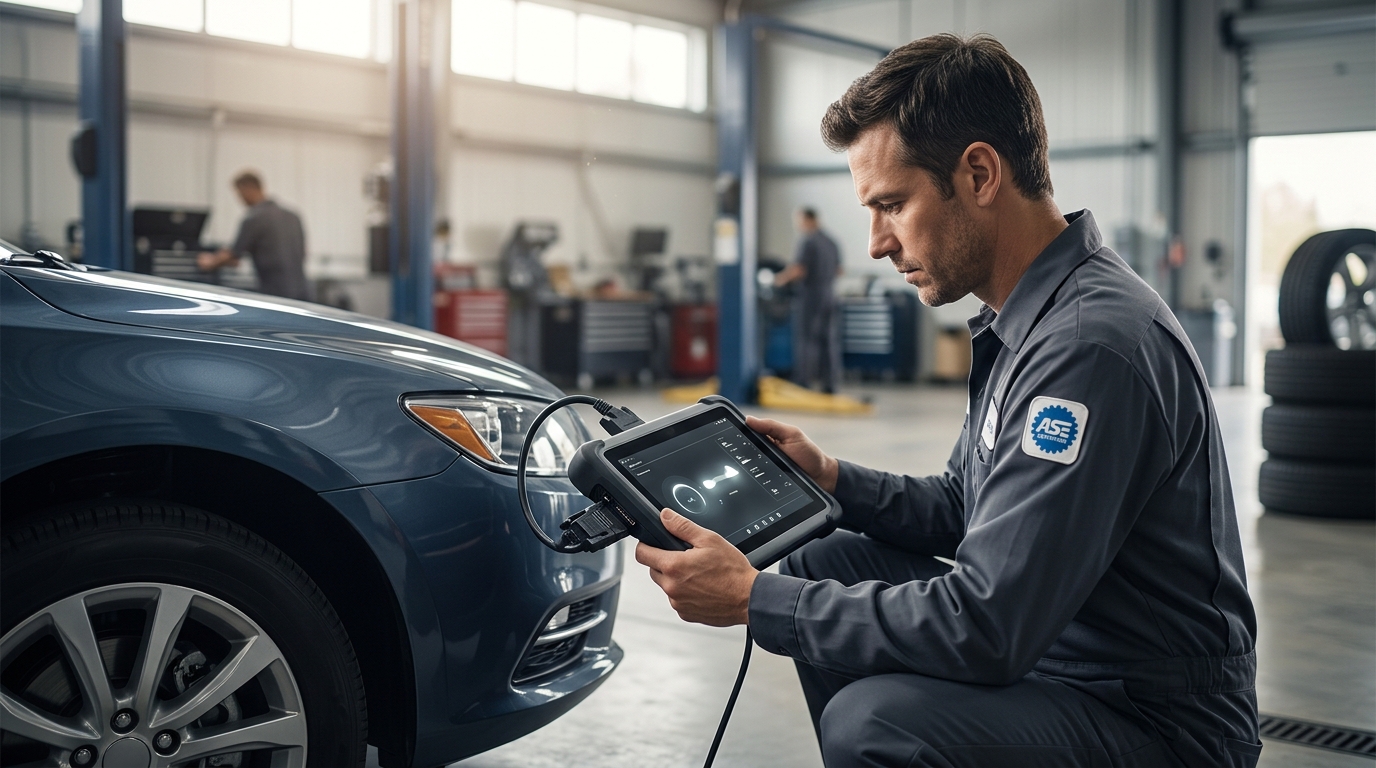
ASE-certified automotive technicians handle engine diagnostic services for commuter vehicles. These professionals use advanced computerized tools to identify faults in engine management systems. This guide covers the specific credentials, diagnostic processes, and performance testing required to maintain modern commuter cars safely and efficiently.
Engine Diagnostics
Engine diagnostics is the systematic process of identifying the cause of a malfunction in a vehicle's powertrain. For commuter vehicles, this often involves interpreting data from the Engine Control Unit (ECU). The ECU monitors hundreds of sensors to manage fuel injection, ignition timing, and emissions. When a sensor detects an out-of-range value, the ECU stores a Diagnostic Trouble Code (DTC). Technicians use these codes as a starting point for a deeper investigation.
Modern commuter vehicles rely heavily on electronic management systems. A simple check engine light can indicate issues ranging from a loose gas cap to a failing catalytic converter. Effective diagnostics require more than just reading codes. Technicians must analyze live data streams to see how the engine behaves under different loads. This approach prevents unnecessary part replacements and ensures the root cause is addressed.
The Role of the ECU
The Engine Control Unit acts as the brain of the vehicle's engine. It processes input from sensors such as the Mass Air Flow (MAF) sensor and the Oxygen (O2) sensor. Based on this data, the ECU adjusts the air-fuel mixture to optimize performance and reduce emissions. If the ECU detects a deviation from expected parameters, it triggers a warning light on the dashboard. according to On board diagnostics
Common Diagnostic Scenarios
Commuter vehicles frequently experience issues related to fuel efficiency and idle stability. A rough idle often points to a vacuum leak or a misfire. A misfire occurs when the air-fuel mixture in a cylinder fails to ignite properly. This can damage the catalytic converter if left unaddressed. Technicians use oscilloscopes and multimeters to verify sensor signals and component health.
ASE Certification
ASE certification is a national standard for automotive service professionals. The National Institute for Automotive Service Excellence (ASE) administers these tests to verify technical competence. Certification is not a one-time event but a continuous process of validation. Technicians must pass specific exams in their area of expertise to earn the credential.
For engine diagnostics, the most relevant certification is the A6 Engine Performance test. This exam covers engine management systems, fuel and air induction, and emissions. Passing this test demonstrates that a technician understands the complex interplay between mechanical and electronic components. Many reputable shops, such as Redwood General Tire Pros, employ ASE-certified technicians to ensure high-quality service.
Understanding the A6 Test
The A6 test is one of the most challenging in the ASE lineup. It requires knowledge of both traditional mechanical systems and modern electronic controls. Candidates must understand how to diagnose issues with fuel injection, ignition systems, and emission controls. Success on this exam indicates a high level of proficiency in engine diagnostics.
Why Certification Matters for Commuters
Commuter vehicles are driven daily and often in stop-and-go traffic. This usage pattern places specific stress on the engine and transmission. A certified technician is trained to recognize these stress patterns. They can identify early signs of wear that might lead to costly breakdowns. This proactive approach helps vehicle owners maintain reliability and safety.
Computerized Diagnostic Tools
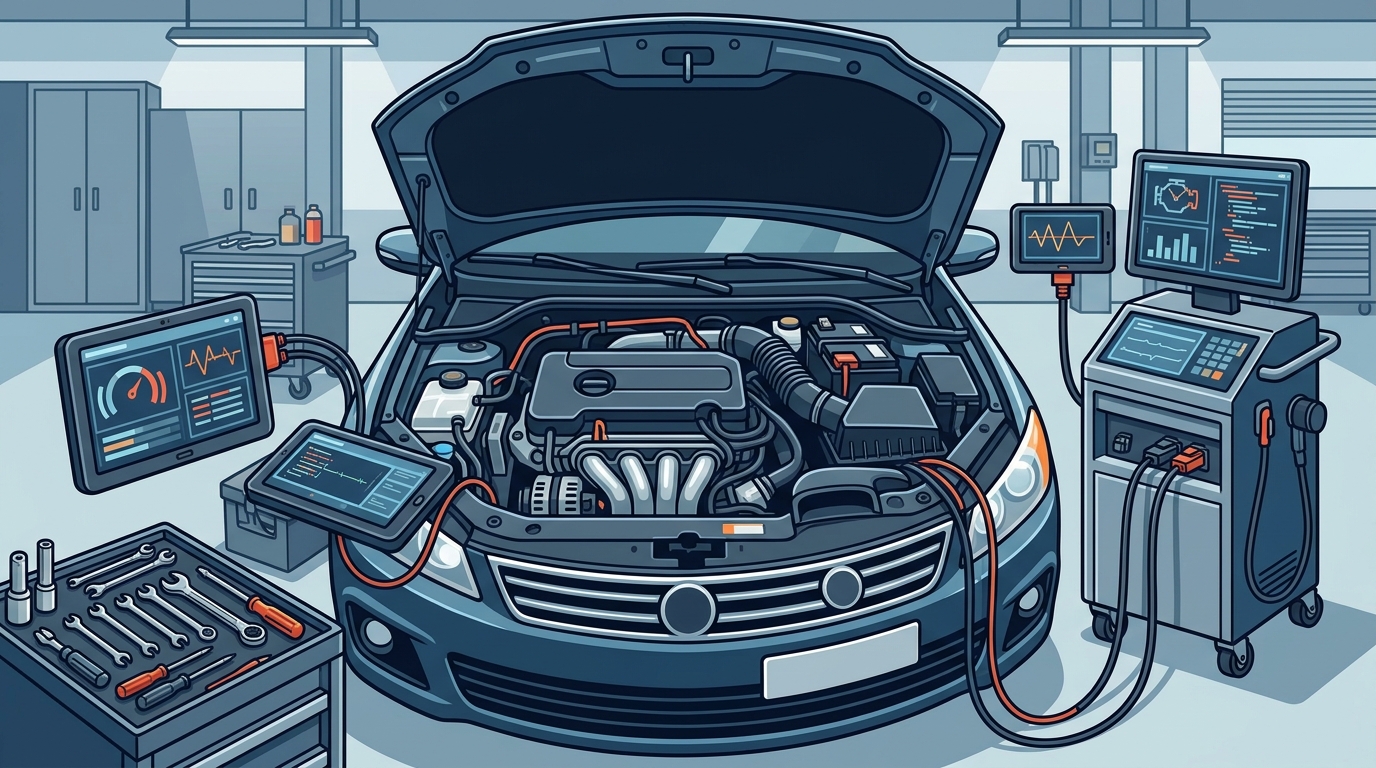
Computerized diagnostic tools are specialized software and hardware used to interface with a vehicle's onboard systems. These tools allow technicians to communicate directly with the ECU and other control modules. They provide access to real-time data, freeze frame information, and stored trouble codes. The accuracy of these tools is critical for effective diagnostics.
Types of Diagnostic Scanners
Live Data Analysis
Live data analysis involves monitoring sensor readings while the vehicle is running. Technicians look for trends and correlations between different parameters. For instance, they might compare the MAF sensor reading with the O2 sensor voltage. Discrepancies between these readings can indicate a specific fault. This methodical approach reduces guesswork and improves repair accuracy. according to Mechanic School Automotive
Engine Performance Diagnostic
Engine performance diagnostic is the evaluation of how well an engine operates under various conditions. This goes beyond identifying faults to assessing overall health and efficiency. Technicians measure power output, fuel consumption, and thermal management. The goal is to ensure the engine meets the manufacturer's specifications for performance and emissions.
For commuter vehicles, performance diagnostics often focus on drivability and fuel economy. A vehicle that feels sluggish or consumes more fuel than expected may have underlying issues. These can include clogged fuel injectors, a restricted exhaust system, or worn engine mounts. Addressing these issues restores the vehicle to its intended performance level.
Compression and Leak-Down Tests
Compression tests measure the pressure generated in each cylinder during the compression stroke. Low compression can indicate worn piston rings, valves, or a blown head gasket. A leak-down test provides more specific information by identifying where the compression is escaping. These tests are fundamental to diagnosing mechanical engine problems.
Fuel System Analysis
The fuel system delivers the correct amount of fuel to the engine at the right time. Technicians check fuel pressure, injector flow rates, and pump operation. A weak fuel pump can cause hesitation under load. Clogged injectors can lead to uneven combustion. Proper fuel system diagnostics ensure consistent power delivery and optimal fuel efficiency.
Automotive Technician Credentials
Automotive technician credentials are the formal qualifications that validate a professional's skills. These include ASE certifications, manufacturer-specific training, and industry experience. Credentials serve as a benchmark for quality and reliability. They provide consumers with confidence in the service they receive. according to Automotive Technician Salary
While ASE certification is the industry standard, it is not the only credential. Many technicians pursue additional training in hybrid and electric vehicle systems. This is increasingly important as the commuter vehicle fleet evolves. Technicians with diverse credentials are better equipped to handle the wide range of vehicles on the road today. according to Automotive Mechanic Careers
Experience and Training
Formal training programs, such as those offered by community colleges and trade schools, provide foundational knowledge. Apprenticeships and on-the-job training allow technicians to apply this knowledge in real-world scenarios. A combination of education and experience is ideal. It ensures that technicians can handle both routine maintenance and complex diagnostic challenges.
Continuing Education
Key Takeaways
- ASE-certified technicians are the primary professionals handling engine diagnostics for commuter vehicles.
- The A6 Engine Performance certification is the key credential for diagnosing engine management systems.
- Computerized diagnostic tools provide access to live data and bidirectional control for accurate fault isolation.
- Engine performance diagnostics assess overall health, including power output, fuel economy, and thermal management.
- Compression and leak-down tests are essential for identifying mechanical engine issues.
- Proactive diagnostics help prevent costly breakdowns and maintain vehicle reliability for daily commuting.
- Choosing a shop with certified technicians ensures high-quality service and accurate repairs.
Frequently Asked Questions
What is the difference between a mechanic and an ASE-certified technician?
A mechanic is a general term for someone who repairs vehicles. An ASE-certified technician has passed standardized exams that verify their technical knowledge. Certification indicates a higher level of proficiency and adherence to industry standards. according to Automotive Technician vs
How often should I have my engine diagnostics checked?
You should have your engine diagnostics checked whenever the check engine light illuminates. It is also recommended as part of routine maintenance, such as during oil changes or tire rotations, to catch potential issues early.
Can a basic code reader diagnose all engine problems?
No, a basic code reader can only retrieve and clear trouble codes. It cannot access live data or perform bidirectional control. Advanced diagnostic tools are required for a thorough diagnosis of complex engine issues.
What does the A6 ASE certification cover?
The A6 certification covers engine performance, including engine management systems, fuel and air induction, and emissions. It is the primary credential for technicians specializing in engine diagnostics.
Why is live data analysis important in diagnostics?
Live data analysis allows technicians to see how the engine behaves in real-time. It helps identify intermittent faults and correlations between different sensors that static codes might miss.
Do hybrid vehicles require different diagnostic tools?
Yes, hybrid vehicles often require specialized tools and training. Technicians need to understand high-voltage systems and specific hybrid control modules. Manufacturer-specific tools are often necessary for full diagnostic access.
How can I verify if a technician is ASE-certified?
You can ask the shop for the technician's ASE certification number. You can also verify it through the ASE website. Reputable shops will display their technicians' certifications prominently.
What is a freeze frame in diagnostic data?
A freeze frame is a snapshot of the vehicle's data at the moment a trouble code was set. It provides context for the fault, such as vehicle speed, engine load, and temperature, which helps in diagnosis.
Conclusion
Understanding who handles engine diagnostics and what credentials they hold is essential for vehicle owners. ASE-certified technicians with expertise in computerized diagnostic tools are the best choice for maintaining commuter vehicles. Their ability to perform comprehensive engine performance diagnostics ensures your car remains reliable and efficient. For trusted service in Redwood City, visit Redwood General Tire Pros to speak with our certified team.