
What Certified Automotive Technicians Handle Engine Diagnostic Services for Commuter Vehicles?
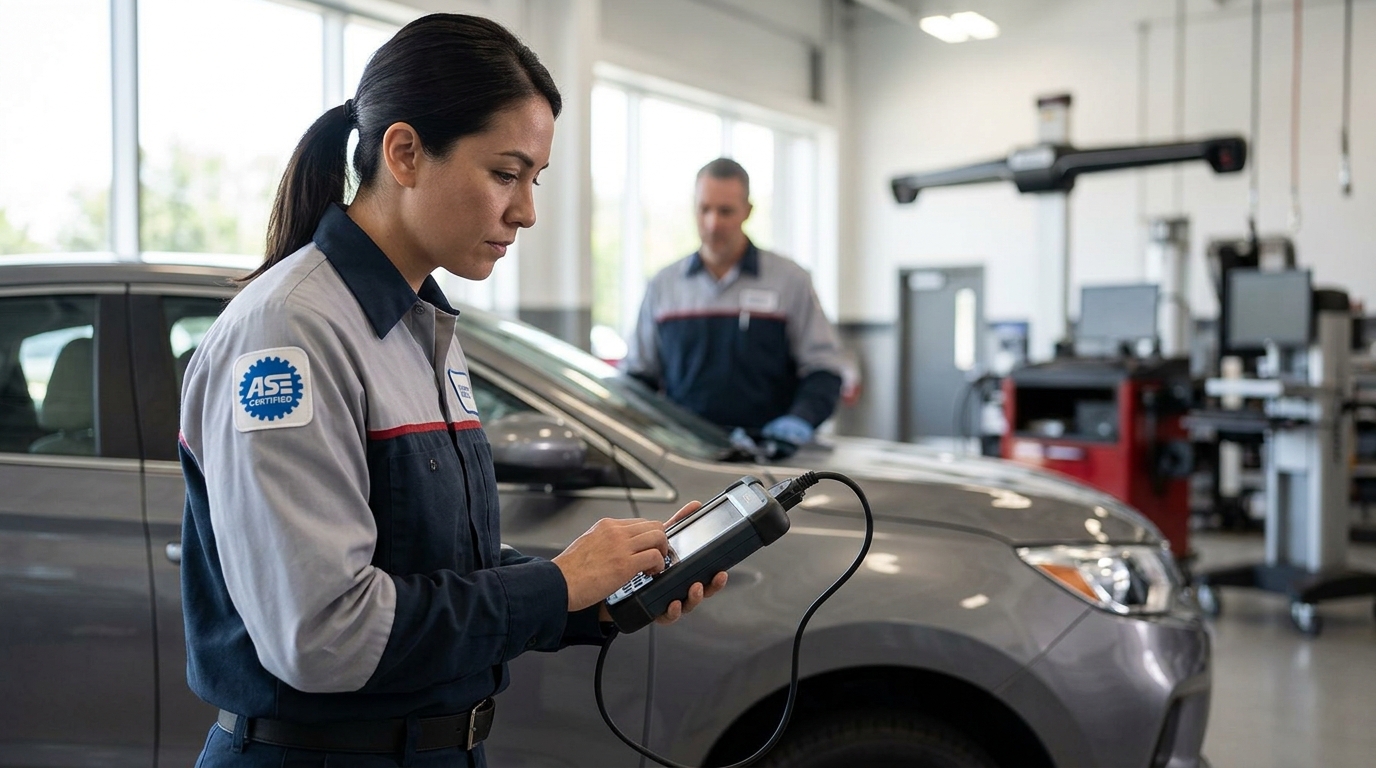
ASE-certified technicians handle engine diagnostic services for commuter vehicles. These professionals use advanced computerized tools to identify faults in modern engine management systems. This guide covers ASE certification standards, engine diagnostic procedures, and the role of computerized diagnostic tools in maintaining commuter vehicle reliability. For additional details, review the Contact Us Redwood General.
ASE Certification Standards
ASE certification is a credential that validates a technician's knowledge and skills in specific automotive areas. The National Institute for Automotive Service Excellence (ASE) administers these tests, which are widely recognized by the industry as a benchmark for technical competence. For commuter vehicles, which often feature complex engine management systems, working with ASE-certified technicians ensures that diagnostics are performed by individuals who have passed rigorous examinations. For additional details, review the About Us Redwood General.
Types of ASE Certifications
Technicians can earn certifications in various specialties, including Engine Repair (A2), Automatic Transmission (A4), and Electrical Systems (A6). A technician who holds multiple certifications is often referred to as a Master Technician. This designation indicates a high level of proficiency across multiple systems, which is crucial for diagnosing issues that span multiple vehicle components.
Why Certification Matters for Commuters
Commuter vehicles, such as sedans and compact SUVs, rely heavily on electronic controls for fuel efficiency and emissions compliance. ASE-certified technicians are trained to interpret data from these systems accurately. This expertise helps prevent misdiagnosis, which can lead to unnecessary repairs and increased costs for vehicle owners.
Engine Diagnostics Process
Engine diagnostics is the process of identifying the cause of a malfunction in a vehicle's engine or related systems. This process typically begins with a visual inspection and a review of the vehicle's history. Technicians then use diagnostic tools to retrieve stored fault codes and live data from the vehicle's onboard computers.
Common Symptoms and Initial Checks
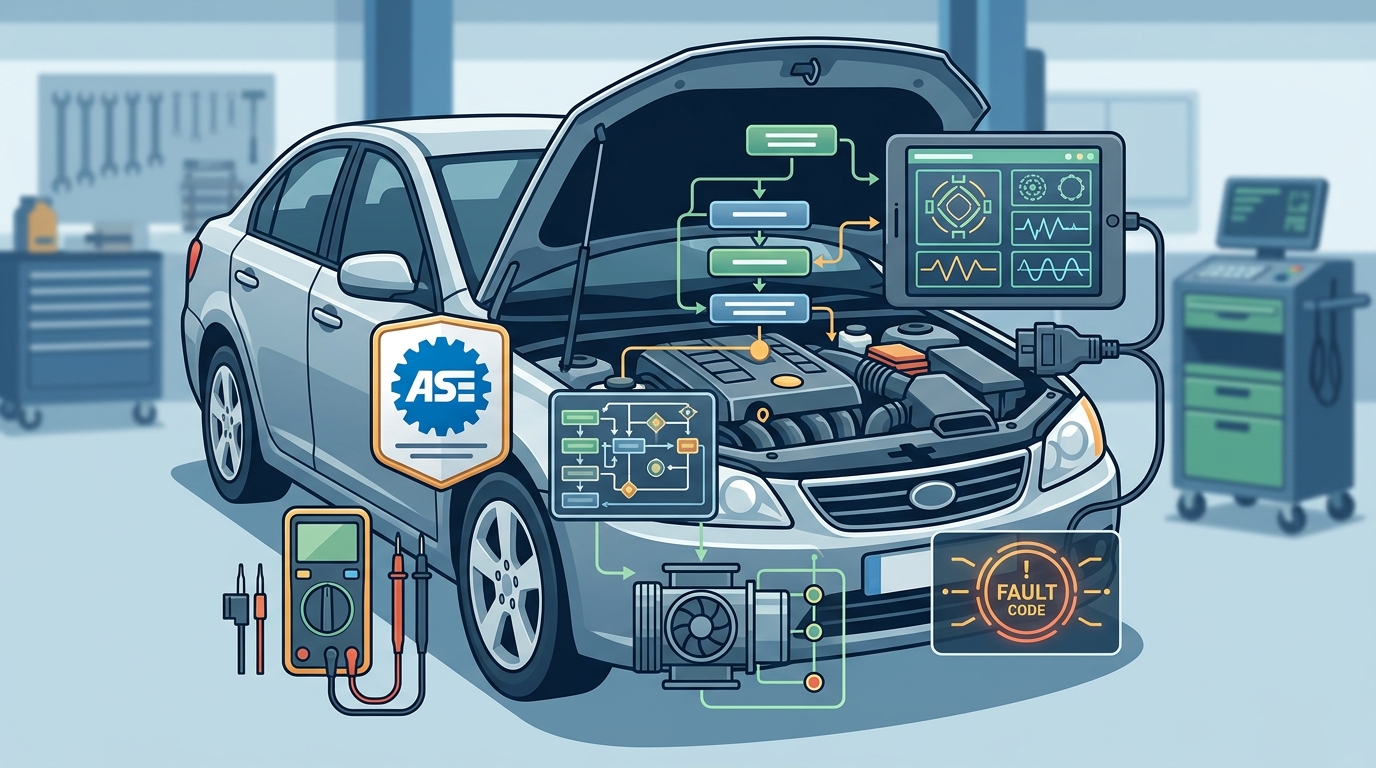
Drivers of commuter vehicles often report symptoms such as a check engine light, reduced power, or poor fuel economy. Technicians start by scanning for Diagnostic Trouble Codes (DTCs). These codes provide a starting point for the investigation but do not always identify the root cause. A thorough diagnostic process involves verifying the code and testing related components to confirm the failure.
Systematic Troubleshooting
Effective engine diagnostics follows a systematic approach. Technicians isolate the problem by testing sensors, actuators, and wiring harnesses. This methodical process ensures that the repair addresses the underlying issue rather than just the symptom. For commuter vehicles, this approach is essential to maintain reliability for daily driving.
Computerized Diagnostic Tools
Computerized diagnostic tools are devices that communicate with a vehicle's Electronic Control Units (ECUs) to retrieve data and perform tests. These tools have evolved significantly, moving from simple code readers to comprehensive systems that can reprogram modules and perform advanced actuation tests. For modern commuter vehicles, these tools are indispensable for accurate diagnostics.
Capabilities of Modern Diagnostic Scanners
Advanced diagnostic scanners can access multiple modules within a vehicle, including the engine, transmission, and body control modules. They allow technicians to view live data streams, such as engine speed, coolant temperature, and oxygen sensor readings. This real-time data helps technicians identify intermittent faults that may not be captured by stored codes alone.
Importance of OEM-Level Tools
While aftermarket scanners are useful for basic diagnostics, OEM-level tools provide deeper access to vehicle systems. These tools often include manufacturer-specific software and updates, which are necessary for diagnosing complex issues in newer commuter vehicles. Using the appropriate level of diagnostic tool ensures that technicians can perform all necessary tests and calibrations.
Key Takeaways
- ASE certification is a key indicator of a technician's technical competence in automotive repair.
- Engine diagnostics involves a systematic process of retrieving codes and testing components.
- Computerized diagnostic tools are essential for accessing data from modern vehicle ECUs.
- Master Technicians hold multiple ASE certifications, indicating broad expertise.
- Visual inspection and vehicle history review are critical first steps in the diagnostic process.
- Live data streams help identify intermittent faults that stored codes may miss.
- OEM-level diagnostic tools provide deeper access to vehicle systems than basic scanners.
- Working with certified technicians helps prevent misdiagnosis and unnecessary repairs.
Frequently Asked Questions
What is ASE certification?
ASE certification is a credential that validates a technician's knowledge and skills in specific automotive areas, administered by the National Institute for Automotive Service Excellence.
Why is ASE certification important for engine diagnostics?
ASE certification ensures that technicians have passed rigorous examinations in specific areas, such as engine repair and electrical systems, which is crucial for accurately diagnosing complex issues in modern commuter vehicles.
What are Diagnostic Trouble Codes (DTCs)?
Diagnostic Trouble Codes are alphanumeric codes stored by a vehicle's ECU when a fault is detected in a specific system. They provide a starting point for technicians to investigate the issue.
How do computerized diagnostic tools work?
Computerized diagnostic tools communicate with a vehicle's ECUs to retrieve stored fault codes and live data. They allow technicians to test sensors and actuators to identify the root cause of a malfunction.
What is a Master Technician?
A Master Technician is an ASE-certified professional who has passed all eight core tests and at least four additional advanced tests, indicating a high level of proficiency across multiple automotive systems.
Do all diagnostic tools provide the same level of access?
No, diagnostic tools vary in capability. Basic scanners may only read codes, while advanced OEM-level tools provide deeper access to vehicle systems, including the ability to reprogram modules and perform actuation tests.
Why is a systematic approach important in engine diagnostics?
A systematic approach ensures that technicians isolate the problem by testing components methodically. This prevents misdiagnosis and ensures that the repair addresses the underlying issue rather than just the symptom.