
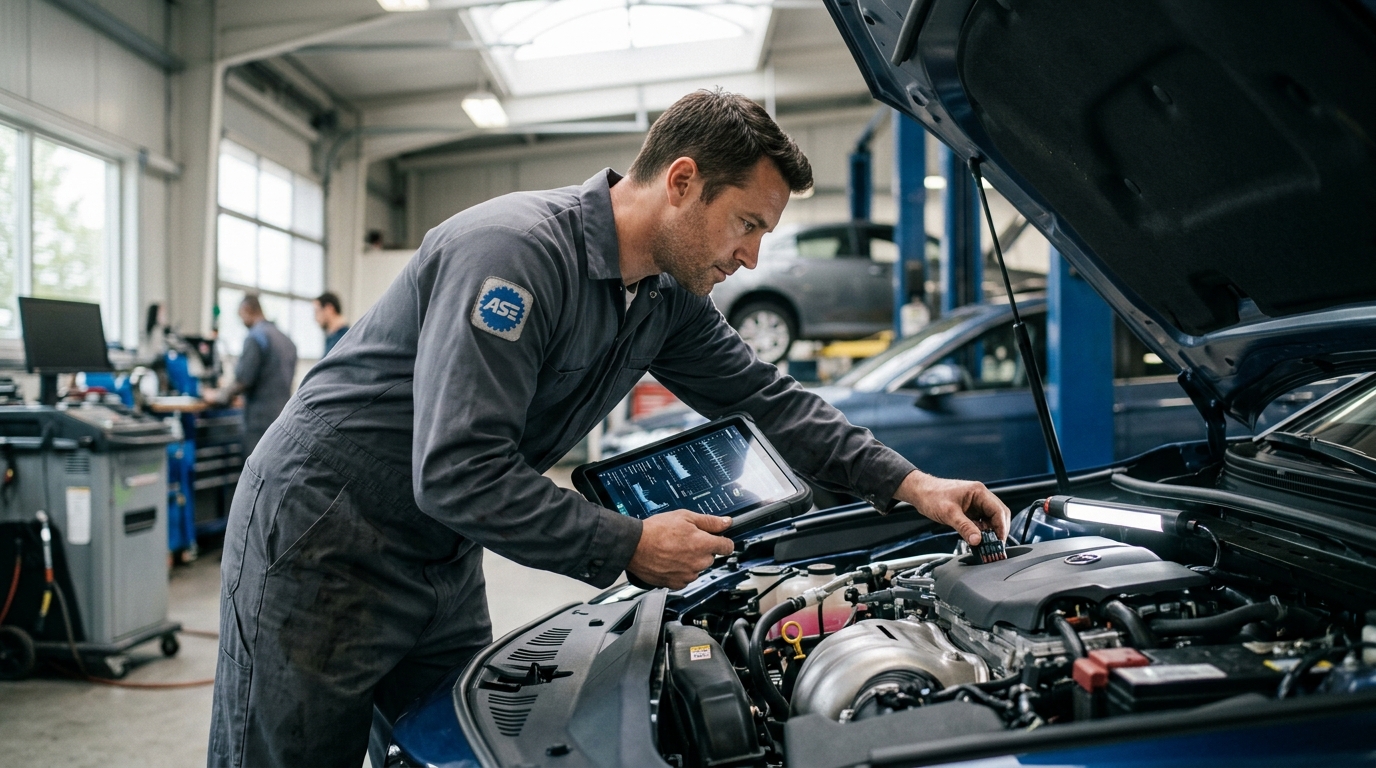
What Certified Automotive Technicians Handle Engine Diagnostic Services for Commuter Vehicles
ASE-certified automotive technicians handle engine diagnostic services for commuter vehicles. These professionals use advanced computerized tools to identify faults in complex electronic systems. This guide covers the certification standards, diagnostic processes, and technology required for modern vehicle maintenance.
ASE Certification Standards
ASE certification is a credential that verifies a technician's proficiency in specific automotive systems. The National Institute for Automotive Service Excellence (ASE) administers these tests to ensure industry-wide standards. For commuter vehicles, this certification is critical because modern cars rely heavily on electronic controls.
The Role of the Master Technician
A master automotive technician is a professional who has passed a comprehensive set of ASE exams. These experts are responsible for signing off on complex repairs and training other staff. They often handle the most difficult diagnostic challenges that standard technicians cannot resolve.
Why Certification Matters for Commuters
Commuter vehicles, such as sedans and SUVs, are driven daily in stop-and-go traffic. This usage pattern places unique stress on engine components. Certified technicians understand how these conditions affect vehicle health. They can identify issues before they lead to breakdowns.
Many employers prefer or require certified technicians for advanced roles and specialty work. This ensures that the shop maintains a high level of quality and reliability. Customers can trust that their vehicle is in the hands of a qualified professional.
Engine Diagnostics Process
Engine diagnostics is the process of identifying the cause of a malfunction in a vehicle's engine. It involves more than just reading error codes from the check engine light. Technicians must understand how various systems interact to provide an accurate diagnosis. according to What is an
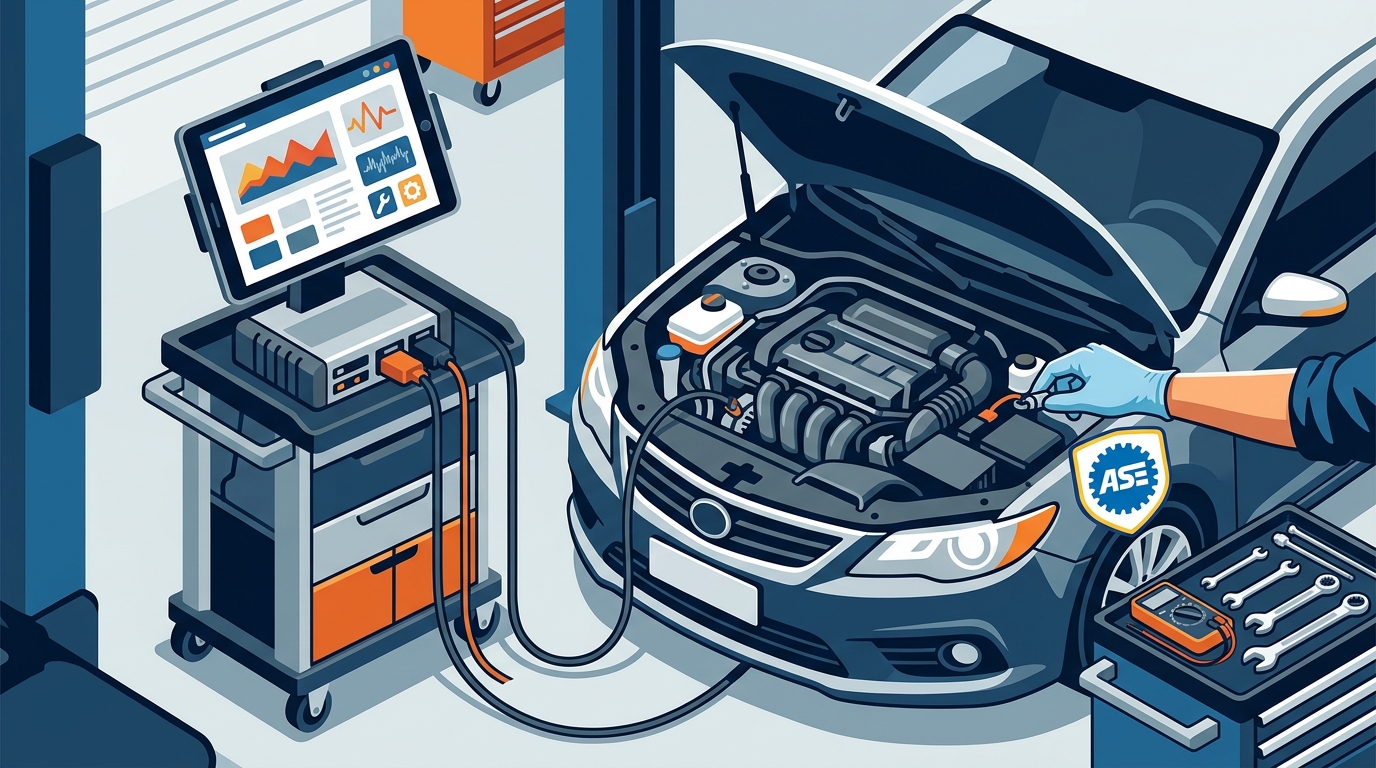
Initial Inspection and Code Reading
The diagnostic process begins with a visual inspection and a test drive. The technician observes the vehicle's behavior and listens for unusual noises. They then connect a diagnostic scanner to the vehicle's onboard computer. This tool retrieves stored diagnostic trouble codes (DTCs).
These codes provide a starting point but do not always tell the whole story. A technician must interpret the codes in the context of the vehicle's symptoms. This step requires experience and a deep understanding of automotive systems.
Systematic Testing and Verification
After identifying potential issues, the technician performs systematic testing. This may include checking sensor readings, testing electrical circuits, and inspecting mechanical components. The goal is to isolate the root cause of the problem.
Once a repair is made, the technician must verify the fix. They clear the codes and test drive the vehicle to ensure the issue is resolved. This verification step is crucial to prevent repeat visits and ensure customer satisfaction.
Common Engine Issues in Commuter Vehicles
Commuter vehicles often experience issues related to fuel efficiency, emissions, and performance. Common problems include faulty oxygen sensors, ignition coil failures, and engine misfires. These issues can trigger the check engine light and reduce fuel economy.
Technicians use their expertise to distinguish between minor and major issues. They provide customers with clear recommendations for repair. This transparency helps drivers make informed decisions about their vehicle maintenance.
Computerized Diagnostic Tools
Computerized diagnostic tools are software and hardware systems that communicate with a vehicle's electronic control units (ECUs). These tools allow technicians to access real-time data and perform advanced tests. They are essential for diagnosing modern commuter vehicles.
Types of Diagnostic Scanners
There are several types of diagnostic scanners available on the market. Basic scanners can read and clear generic OBD-II codes. Advanced scanners can access manufacturer-specific systems and perform bi-directional controls.
| Tool Type | Capabilities | Best For |
|---|---|---|
| Basic OBD-II Scanner | Reads and clears generic codes | Home owners, basic checks |
| Advanced Diagnostic Tool | Accesses all modules, bi-directional controls | Professional technicians, complex repairs |
| Manufacturer-Specific Tool | Deep access to specific brand systems | Dealerships, specialized shops |
The Importance of Real-Time Data
Real-time data allows technicians to monitor sensor readings while the vehicle is running. This data helps identify intermittent issues that may not be present when the vehicle is stationary. For example, a sensor might only fail under specific temperature or load conditions.
By analyzing this data, technicians can pinpoint the exact component causing the problem. This precision reduces the need for guesswork and unnecessary part replacements. It also helps ensure that the repair is effective and long-lasting.
Future of Diagnostic Technology
Diagnostic technology continues to evolve with the rise of electric and hybrid vehicles. New tools are being developed to handle the unique requirements of these powertrains. Technicians must stay updated on these advancements to remain competitive.
Key Takeaways
- ASE certification is a key indicator of a technician's expertise in automotive systems.
- Master technicians handle complex diagnostics and train other staff members.
- Engine diagnostics involves a systematic process of inspection, testing, and verification.
- Computerized tools are essential for accessing real-time data from vehicle ECUs.
- Advanced scanners provide deeper insights than basic OBD-II devices.
- Regular maintenance and prompt attention to warning signs can prevent major issues.
- Technicians must stay updated on evolving diagnostic technology for modern vehicles.
Frequently Asked Questions
What is ASE certification?
ASE certification is a credential that verifies a technician's proficiency in specific automotive systems. It is administered by the National Institute for Automotive Service Excellence.
Why is certification important for engine diagnostics?
Certification ensures that technicians have the knowledge and skills to accurately diagnose complex electronic systems in modern vehicles.
What is a master automotive technician?
A master automotive technician is a professional who has passed a comprehensive set of ASE exams and is responsible for signing off on complex repairs.
How do computerized diagnostic tools work?
Computerized diagnostic tools communicate with a vehicle's electronic control units to retrieve data and perform tests.
What is the median wage for automotive technicians?
Why do commuter vehicles need specialized diagnostics?
Commuter vehicles are driven daily in stop-and-go traffic, which places unique stress on engine components and requires specialized diagnostic attention.