

Passenger vehicle tires should be rotated every 5,000 to 7,500 miles to prevent uneven tread wear and maximize lifespan. This guide covers manufacturer recommendations, specific rotation patterns, and the impact of driving conditions on tire longevity. We will explore how to identify wear patterns and why professional service is critical for safety.
Tire Rotation Interval
Tire rotation is the process of moving tires from one position on the vehicle to another to ensure even tread wear. The standard interval for most passenger vehicles is every 5,000 to 7,500 miles. This frequency aligns with typical oil change schedules, making it easy to bundle services. Adhering to this interval prevents the front tires from wearing down significantly faster than the rear tires, which is common in front-wheel-drive vehicles.
Why Mileage Matters
Driving habits directly influence how quickly tires wear. Aggressive driving, frequent hard braking, and carrying heavy loads accelerate tread loss. In these scenarios, rotating tires at the lower end of the 5,000-mile range is advisable. Conversely, gentle driving on smooth highways may allow for the 7,500-mile interval. Consistency is more important than the exact number; a regular schedule ensures no single tire is overworked.
Time-Based Rotation
For drivers who do not drive frequently, time-based rotation is a viable alternative. Rotating tires every six months can prevent flat spots and uneven wear caused by static pressure. This is particularly relevant for vehicles that sit idle for extended periods. Whether you choose mileage-based or time-based rotation, the goal remains the same: distributing wear evenly across all four tires.
Manufacturer Recommendations
Vehicle manufacturers provide specific guidelines for tire rotation in the owner's manual. These recommendations are based on the vehicle's drivetrain configuration and tire specifications. Ignoring these guidelines can void tire warranties and lead to premature tire failure. It is essential to consult the manual for your specific make and model to determine the correct rotation pattern and interval. according to 19VAC30 70 500
Drivetrain Specifics
Front-wheel-drive (FWD) vehicles typically experience faster wear on the front tires due to the weight of the engine and the force of acceleration. Manufacturers often recommend a specific pattern for FWD vehicles to address this imbalance. Rear-wheel-drive (RWD) vehicles may have different recommendations, as the rear tires handle the propulsive force. All-wheel-drive (AWD) and four-wheel-drive (4WD) systems require strict adherence to manufacturer guidelines to prevent damage to the drivetrain components.
Warranty Implications
Most tire manufacturers require regular rotation as a condition of their warranty. If a tire fails due to uneven wear and the owner cannot prove regular rotation, the warranty claim may be denied. Keeping records of your rotation services is a simple way to protect your investment. Professional service centers can provide documentation that satisfies warranty requirements.
Common Rotation Patterns
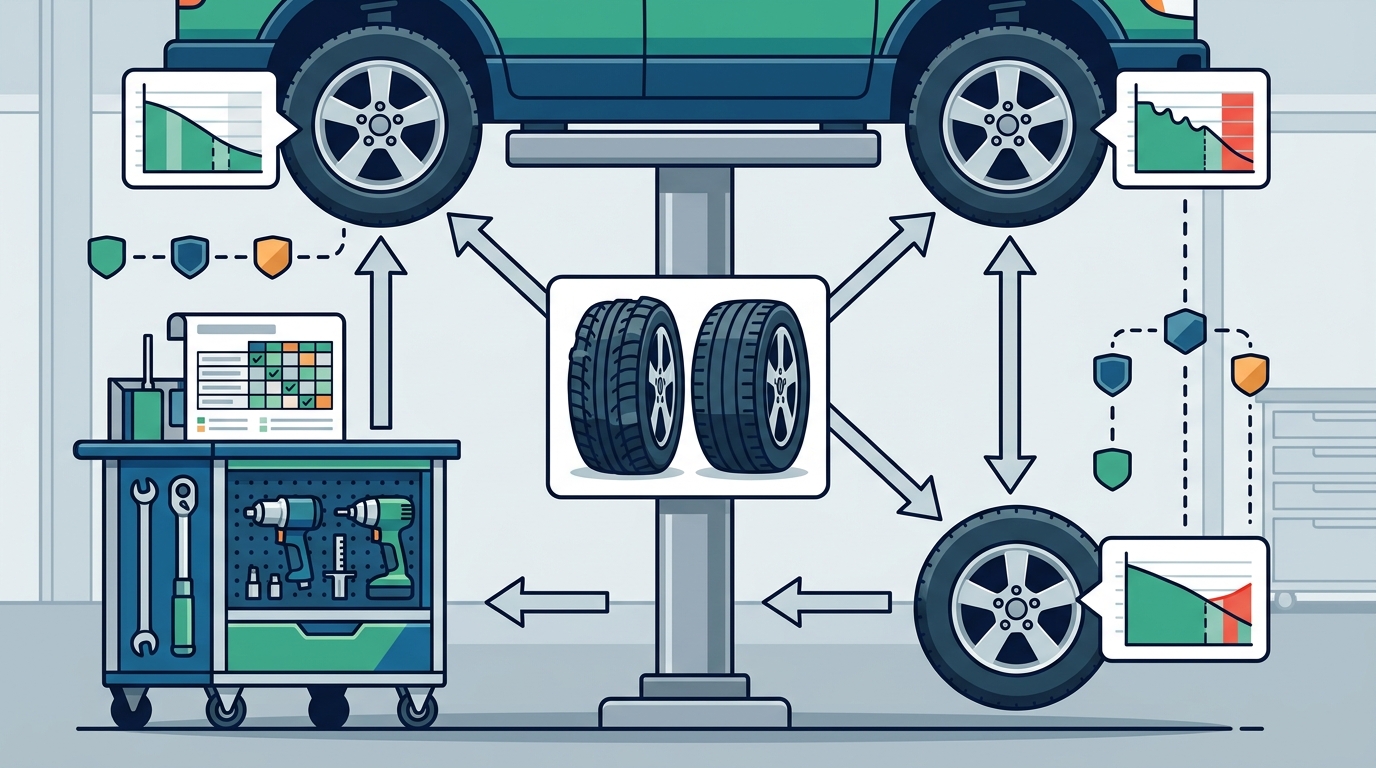
There are several standard rotation patterns used by professional technicians. The choice of pattern depends on the vehicle's drivetrain and the type of tires installed. Using the wrong pattern can lead to uneven wear and reduced tire life. Understanding these patterns helps drivers communicate effectively with their service providers.
Front-to-Rear Pattern
This pattern is commonly used for vehicles with non-directional tires. The front tires move to the rear, and the rear tires move to the front. This simple swap helps balance the wear between the front and rear axles. It is a straightforward method that works well for many standard passenger cars.
Cross Pattern
The cross pattern involves moving the front tires to the opposite rear position and the rear tires to the opposite front position. This pattern is often recommended for front-wheel-drive vehicles to counteract the heavier wear on the front tires. It ensures that each tire experiences a different set of conditions, promoting even wear across the tread.
Directional Tire Constraints
Directional tires, which have a specific tread design for water evacuation, can only be rotated front-to-rear on the same side of the vehicle. They cannot be crossed from left to right. This limitation requires a different approach to balancing wear. Technicians must ensure that the tires are installed in the correct orientation to maintain performance and safety.
Impact of Driving Conditions
Local driving conditions play a significant role in tire wear. Urban environments with frequent stop-and-go traffic can cause tires to wear faster than highway driving. The constant acceleration and braking put additional stress on the tread. Drivers in these areas should consider rotating their tires more frequently to maintain optimal performance.
Climate and Road Surface
Extreme temperatures and rough road surfaces can accelerate tire degradation. Heat causes the rubber to soften, leading to faster wear, while cold temperatures can make the rubber brittle. Potholes and rough pavement can also cause uneven wear and damage to the tire structure. Adjusting your rotation interval based on local conditions can help extend the life of your tires. according to eCFR 49 CFR
Load and Towing
Regularly carrying heavy loads or towing trailers increases the stress on your tires. The additional weight causes the tires to work harder, leading to faster tread wear. If you frequently tow or carry heavy loads, it is advisable to rotate your tires every 5,000 miles. This ensures that the extra wear is distributed evenly across all four tires.
Identifying Uneven Wear
Recognizing the signs of uneven tire wear is crucial for maintaining vehicle safety. Uneven wear can lead to poor handling, reduced traction, and increased risk of blowouts. Regular inspections can help you identify these issues before they become serious. Pay attention to the following indicators when checking your tires.
Visual Inspection
Look for areas of the tread that are significantly more worn than others. Cupping, scalloping, and feathering are common signs of uneven wear. These patterns can indicate alignment issues, suspension problems, or improper inflation. A visual inspection is a simple way to monitor tire health between professional services.
The Penny Test
The penny test is a quick way to check tread depth. Insert a penny into the tread with Lincoln's head upside down. If you can see the top of Lincoln's head, your tread depth is less than 2/32 of an inch, and the tire needs replacement. This test helps you determine when it is time to replace your tires, regardless of the rotation schedule.
Key Takeaways
- Rotate tires every 5,000 to 7,500 miles for optimal tread life.
- Consult your owner's manual for manufacturer-specific recommendations.
- Use the correct rotation pattern for your drivetrain and tire type.
- Adjust rotation frequency based on driving conditions and load.
- Regular rotation helps maintain warranty coverage on tires.
- Inspect tires for signs of uneven wear between rotations.
- Professional service ensures accurate rotation and documentation.
Frequently Asked Questions
How often should I rotate my tires if I drive in the city?
If you drive in the city with frequent stop-and-go traffic, it is recommended to rotate your tires every 5,000 miles. The additional stress from urban driving can accelerate tread wear, making more frequent rotations beneficial.
Can I rotate my tires myself?
While it is possible to rotate tires yourself, it requires the proper tools and knowledge of the correct pattern. Professional service centers have the equipment and expertise to ensure the rotation is done correctly and safely.
What happens if I don't rotate my tires?
Failing to rotate tires leads to uneven wear, which reduces tire life and can compromise vehicle safety. It may also void your tire warranty and lead to poor handling and traction.
Do all-wheel-drive vehicles have different rotation requirements?
Yes, all-wheel-drive vehicles often have specific rotation requirements to prevent damage to the drivetrain. Always follow the manufacturer's guidelines for AWD vehicles to ensure proper function and longevity.
How do I know if my tires are wearing unevenly?
Look for visible patterns of wear, such as cupping or feathering. You can also use the penny test to check tread depth. If one tire is significantly more worn than the others, it is a sign of uneven wear.
Does tire rotation affect fuel efficiency?
Yes, uneven tire wear can increase rolling resistance, which reduces fuel efficiency. Regular rotation helps maintain even tread depth, which supports optimal fuel economy.