

Passenger vehicle tires should be rotated every 5,000 to 7,500 miles to prevent uneven tread wear. This guide covers manufacturer recommendations, specific rotation patterns, and the impact of driving conditions on tire longevity. We will explore how to identify wear patterns and why professional service matters for your vehicle's safety and performance.
Tire Rotation Interval
Tire rotation is the process of moving tires from one position on the vehicle to another to ensure even wear. The standard interval for most passenger vehicles is every 5,000 to 7,500 miles. This timeframe aligns closely with typical oil change schedules, making it easy to bundle services. Consistent rotation prevents the front tires from wearing out significantly faster than the rear tires, which is common in front-wheel-drive vehicles.
Why Mileage Matters
Wear is not uniform across all four tires. Front tires typically handle steering and, in many cars, the majority of braking force. Rear tires focus on traction and stability. Without rotation, the front tires may reach the minimum tread depth limit while the rear tires still have substantial tread remaining. This imbalance reduces overall vehicle safety and shortens the usable life of the tire set.
Time-Based Rotation
For drivers who do not cover high mileage, a time-based approach is effective. Rotating tires every six months is a reliable benchmark. Even if the car sits in a garage, tires can develop flat spots or uneven pressure distribution. A six-month check ensures that tires remain in optimal condition regardless of distance driven.
Manufacturer Recommendations
Vehicle manufacturers provide specific guidelines for tire rotation in the owner's manual. These recommendations are based on the drivetrain configuration and the specific tire models tested during development. Ignoring these guidelines can void certain aspects of the tire warranty and lead to premature failure. according to 19VAC30 70 500
Front-Wheel Drive Vehicles
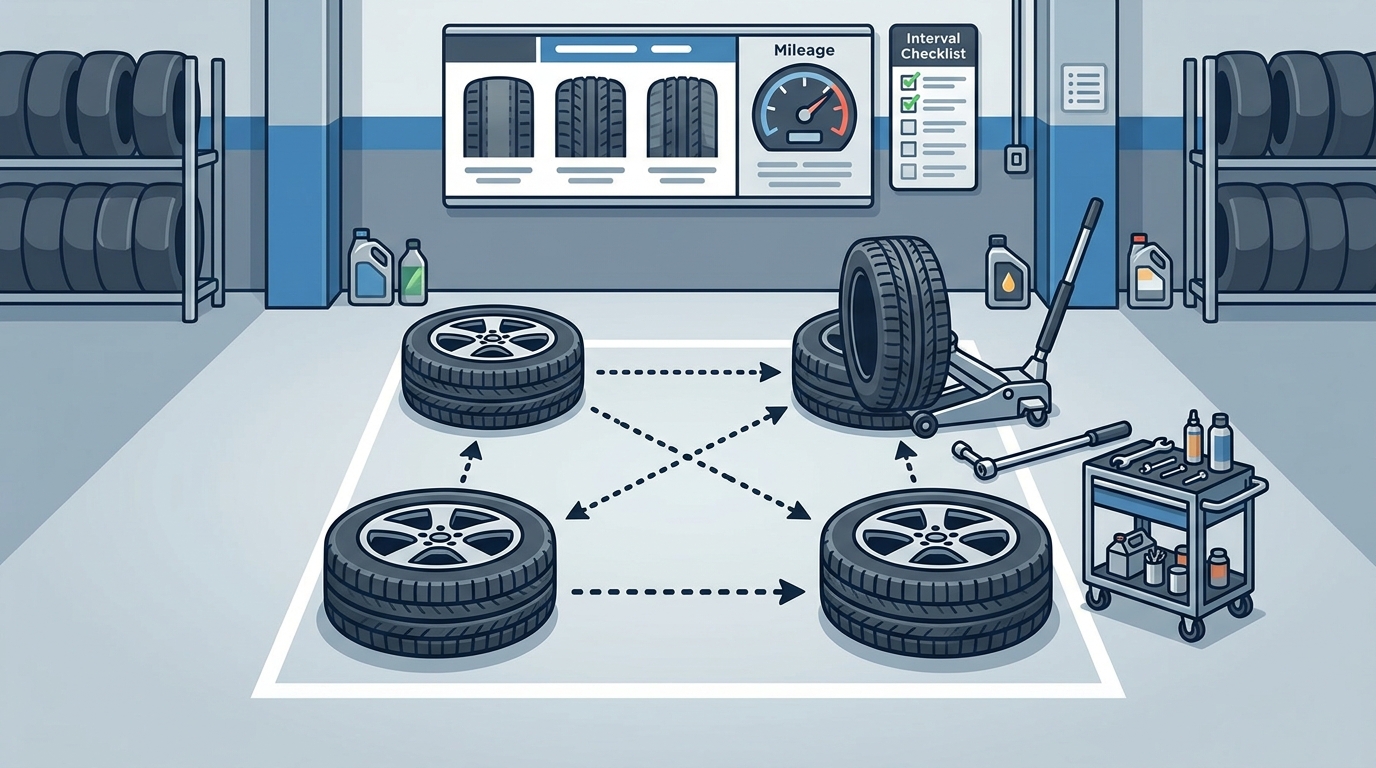
In front-wheel-drive (FWD) vehicles, the front tires wear faster due to the transfer of power and steering loads. Manufacturers often recommend a front-to-rear cross pattern for these vehicles. This pattern moves the front tires to the rear and the rear tires to the opposite front positions. This specific arrangement helps equalize wear across all four corners of the vehicle.
Rear-Wheel Drive and AWD
Rear-wheel-drive (RWD) vehicles experience faster wear on the rear tires. All-wheel-drive (AWD) systems distribute power to all four wheels, but wear patterns can still vary based on driving habits. For RWD vehicles, a front-to-rear cross pattern is also common. For AWD vehicles, manufacturers may recommend a lateral shift or a specific cross pattern to maintain the balance required by the drivetrain system. according to eCFR 49 CFR
Common Rotation Patterns
There are two primary patterns used in the industry: the front-to-rear cross and the lateral shift. The correct pattern depends on the vehicle's drivetrain and whether it has a spare tire of the same size.
| Pattern Type | Best For | Description |
|---|---|---|
| Front-to-Rear Cross | FWD and RWD | Front tires move to the opposite rear positions. Rear tires move to the front. |
| Lateral Shift | AWD and Vehicles with Spare | Tires move from left to right or right to left. The spare tire is often included in the rotation. |
Choosing the wrong pattern can lead to continued uneven wear. For example, using a lateral shift on a front-wheel-drive vehicle may not adequately address the faster wear on the front tires. It is essential to follow the specific pattern outlined in the owner's manual or by a certified technician.
Impact of Driving Conditions
Driving habits and environmental factors can accelerate tire wear, potentially requiring more frequent rotations. Aggressive driving, such as hard braking and rapid acceleration, places extra stress on the tire tread. This stress can cause cupping or scalloping, which is a form of uneven wear that rotation alone may not fully correct.
Climate and Road Surface
Extreme temperatures and rough road surfaces contribute to faster tread degradation. In areas with frequent potholes or unpaved roads, tires may suffer from impact damage. Regular inspections are crucial in these conditions to detect issues early. Drivers in these environments should consider rotating tires at the lower end of the recommended mileage range.
Load and Towing
Consistently carrying heavy loads or towing trailers increases the weight on the tires. This added weight can cause the tread to wear down more quickly, particularly on the rear tires. If you frequently tow, it is advisable to monitor tire pressure and tread depth more closely. More frequent rotations can help distribute the wear caused by the extra load.
Identifying Uneven Wear
Recognizing the signs of uneven wear is critical for maintaining vehicle safety. One common sign is a tire that wears down on one edge. This often indicates an alignment issue rather than a need for rotation. Another sign is cupping, where the tread has a series of dips or hollows. This pattern is usually caused by worn suspension components.
The Penny Test
The penny test is a simple method to check tread depth. Insert a penny into the tread groove with Lincoln's head upside down. If you can see the top of Lincoln's head, the tread depth is below 4/32 of an inch, and the tire should be replaced. If the tread covers part of Lincoln's head, the tire still has usable tread. This test helps determine if rotation is still beneficial or if replacement is necessary.
Visual Inspection
Regular visual inspections can reveal issues that the penny test might miss. Look for cracks in the sidewall, which can indicate aging or underinflation. Check for bulges or bubbles, which suggest internal damage. These signs require immediate attention from a professional, as they can lead to a blowout. Combining visual checks with the penny test provides a comprehensive assessment of tire health.
The Role of Professional Service
Benefits of Professional Inspection
Professional shops check tire pressure, balance, and alignment as part of the rotation service. These additional checks ensure that the tires are not only rotated correctly but also performing optimally. Proper inflation is crucial for fuel efficiency and safety. Underinflated tires generate more heat, which can lead to premature failure. A professional service ensures that all these factors are addressed in a single visit.
Convenience and Safety
Scheduling a professional rotation is convenient and safe. It eliminates the need for heavy lifting and the risk of injury associated with DIY tire changes. Additionally, professional shops use torque wrenches to ensure that lug nuts are tightened to the manufacturer's specifications. This attention to detail is critical for maintaining the integrity of the wheel assembly. For most drivers, the cost of professional service is a worthwhile investment in vehicle safety and longevity.
Key Takeaways
- Rotate tires every 5,000 to 7,500 miles to ensure even tread wear.
- Follow the specific rotation pattern recommended in your owner's manual.
- Front-wheel-drive vehicles typically require a front-to-rear cross pattern.
- Time-based rotation every six months is effective for low-mileage drivers.
- Aggressive driving and heavy loads can accelerate wear, requiring more frequent checks.
- Use the penny test to monitor tread depth and determine when replacement is needed.
- Professional service includes alignment and pressure checks, enhancing overall safety.
- Regular inspections help detect suspension issues that cause uneven wear.
Frequently Asked Questions
How often should I rotate my tires if I drive less than 10,000 miles a year?
If you drive less than 10,000 miles a year, rotating your tires every six months is a good practice. This time-based approach ensures that tires remain in good condition even if they do not reach the mileage threshold. It helps prevent flat spots and maintains even wear.
Does tire rotation affect fuel efficiency?
Yes, tire rotation can indirectly affect fuel efficiency. Evenly worn tires maintain consistent rolling resistance, which helps improve fuel economy. Uneven wear can cause the vehicle to work harder, leading to increased fuel consumption. Regular rotation helps maintain optimal tire performance.
Can I rotate my tires myself?
Yes, you can rotate your tires yourself if you have the necessary tools and knowledge. However, it is important to follow the correct pattern and ensure that lug nuts are torqued to the manufacturer's specifications. If you are unsure, it is best to have a professional perform the service.
What is the difference between tire rotation and wheel alignment?
Tire rotation involves moving tires to different positions on the vehicle to ensure even wear. Wheel alignment involves adjusting the angles of the wheels to meet the manufacturer's specifications. Both services are important for maintaining tire health, but they address different aspects of vehicle performance.
How do I know if my tires need to be replaced?
Use the penny test to check tread depth. If the tread depth is below 4/32 of an inch, the tires should be replaced. Additionally, look for signs of damage such as cracks, bulges, or excessive wear. If you notice any of these issues, it is time to replace the tires.
Does the type of tire affect the rotation interval?
The type of tire can affect the rotation interval. Performance tires may wear faster than all-season tires, potentially requiring more frequent rotations. Always refer to the tire manufacturer's recommendations for specific guidance. Consulting with a professional can help determine the best interval for your specific tire model.
What happens if I don't rotate my tires?
If you do not rotate your tires, they will wear unevenly. This can lead to reduced traction, poor handling, and a shorter overall tire life. In extreme cases, uneven wear can cause a blowout, which is a serious safety hazard. Regular rotation is a simple and effective way to prevent these issues.
How much does tire rotation cost?
The cost of tire rotation varies by shop and location. Many shops offer it as a free service when you purchase new tires or as part of a maintenance package. If charged separately, it is typically an affordable service that provides significant benefits in terms of tire longevity and safety.